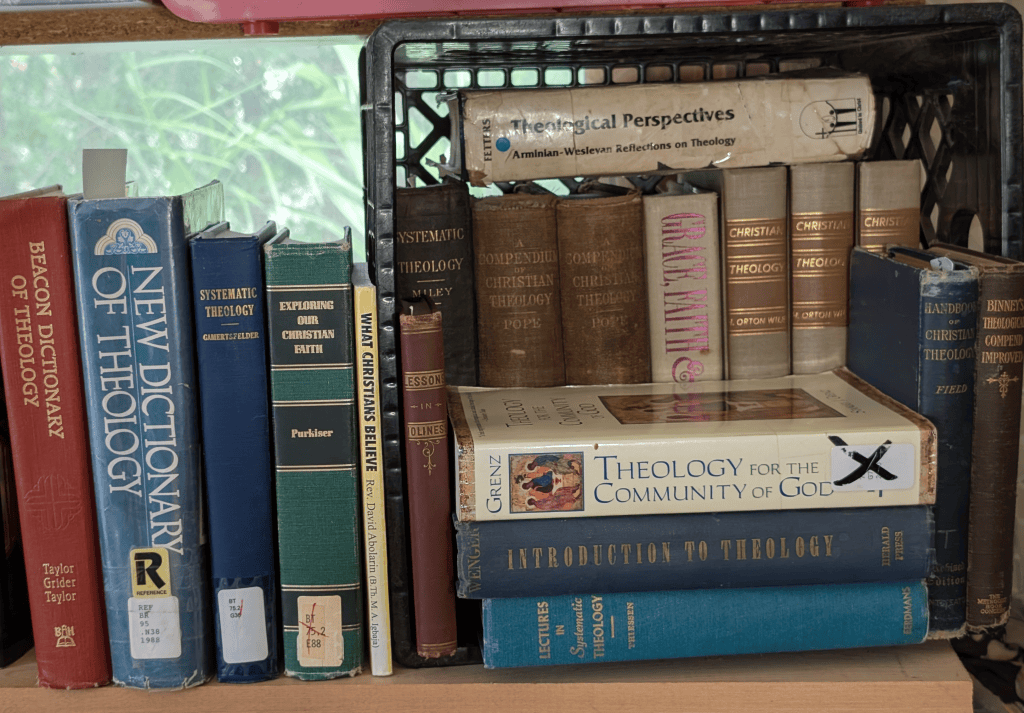
Remember that EMCC History is “personal, unofficial, and informal”? I continue reviewing EMCC’s theological journey including my opinions about the reading course books. I am looking for clues about theological shifts in the Missionary Church.
Reading Course Theologies. Instead of publishing their own textbooks, the Missionary Church has relied on a variety of systematic theologies by others, in the reading courses and then in our colleges. I reviewed some of the books of the MBiC Probationer’s Reading Course in earlier EMCC History blogs.1 Now it is time to focus on the chief theological textbooks required from the 1880s onward. It is a curious feature of Church that claims to be rooted in Wesley and Anabaptist theology, (EMCC website) that books by John Wesley and Anabaptists are rarely used or quoted in the Gospel Banner, the denominational magazine from 1878 to 1969, or referred to in the Reading Course.
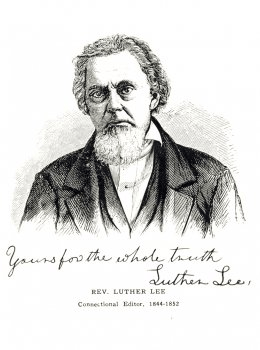
most of the right boxes in 1882. Credit: Wikipedia
The first reading list of 1882 named a theology book by Luther Lee (1800-1889), Elements of Theology.2 Lee was a minister of the Methodist Episcopal Church who objected to various trends in the MEC and helped found the breakaway Wesleyan Methodist Connection of America in 1843.3 After the American Civil War, he judged his objections (mainly over slavery) had been satisfied and he rejoined the MEC.4 He also supported temperance, women’s ordination (he preached at the ordination of Antoinette Brown, a Congregationalist, the first woman to be ordained in the United States), and was an opponent of secret societies. The first edition of his Elements was published in 1856, so the book the Evangelical United Mennonite Church recommended was a reprint edition (reaching a 12th ed in 1899). Since Lee died in Flint, Michigan, I wonder if his radicalness and his presence in Michigan for the last 22 years of his life brought his book to the attention of the EUM leaders, who had churches in that part of Michigan.
On the particular interest of the EUM’s leaders on sanctification, they chose an obscure author (at least he is now), Thomas K Doty and his Lessons in Holiness. It was a new book then (1881) and it must have caught someone’s fancy because it remained on the reading list until at least 1924, when it was an alternate text to Milton Lorenzo Haney, Inheritance Restored 3rd ed (Chicago, IL: Christian Witness Co, 1897). Doty’s book deals quite sanely with many practices and questions Wesleyan holiness people would encounter. One MCHT copy of Doty’s Lessons was owned by Minnie White, a city mission preacher from Ontario, who as Mrs Mary A Finlay and a member of the MBiC Canadian Northwest Conference, led the Beulah Home for thousands of unwed women and their babies in Edmonton for decades. Another copy was owned by Cyrus N Good5 of the Ontario Conference, with his questions for probationers penciled in the margin.
Milton Haney was also a Methodist. His book is a strange choice for the MBiC, because he was well-known as the “fighting chaplain” in the Union army in the American Civil War, who, though a chaplain, picked up a musket in a critical point in his regiment’s fight near Atlanta and received a medal for his part.
In the German-language list of 1882, the committee chose Charles Buck’s A Theological Dictionary in German translation by a Joseph Ehrenfried. This seems like a rather desperate choice because Buck (1771-1815) was an English “high Calvinist” Congregationalist and his book was heavily edited by various hands in many editions in the 19th century. [https://www.baptists.net/history/2023/06/the-life-and-death-of-charles-buck/]
The committee also stipulated William W Orwig, Heilsfuelle [“The Fullness of Salvation”].6 This was a holiness text from the Evangelical Association, in which Orwig was an influential leader of the second generation, editor, historian and conference leader.
Holiness remained a regular study in the probationer’s reading list, but I will not follow that strand further in this post, nor some of the other books with significant theology on particular topics such as the Last Things.
Appearing only in the 1882 lists were Menno Simons’ Works, in English (an edition of 1871); and in German, (edition of 1876). Both were translations from Dutch. I don’t believe Menno continued a major source of theology for the MBiC. His big book was dropped from the next version of the list. It’s too bad, as Menno has a lot of good stuff to teach and its study would have preserved Anabaptist theology longer in the MBiC/ UMC.
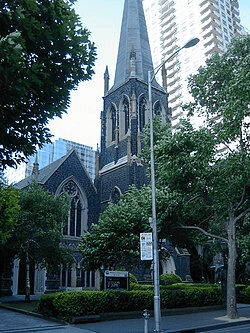
Credit: Wikipedia, Wesley Uniting Church
The 1888 General Conference replaced Menno with Benjamin Field, The Student’s Handbook of Christian Theology.7 This update provided a basic theology text designed for Methodist theology students. The MBiC General Conference must have believed Methodist systematics, while not ideal in matters of the candidates or mode of baptism, would be serviceable for nearly all other areas of Christian belief. It was non-Calvinist, was friendly to “Connectional” (think: Conference) church structures and superintendents, was Protestant on salvation (by grace through faith alone) and Wesleyan on sanctification growth (subsequent to justification, possibly by a moment or crisis8). Methodists could be democratic in church government, with the authority of the bishops/ superintendents subject to the Conferences, not monarchial over them. Field (1823-1869) was a British Methodist who was briefly a missionary in India, but had to resign due to “the climate,” served circuits in England and later journeyed to Australia, hoping it would restore his health. He wrote his handbook there and died shortly after from what looks to me like TB. Sadly, he had just seen his second wife, Kate, die shortly after childbirth.9 Field’s Handbook remained a text until maybe 1956, when it would have seemed quite out of date to the readers, unfortunately. However by the 1950s and definitely in the 1960s, very few candidates for the ministry followed the reading course, anyway: most were Bible College students.
The MCHT copy was owned by Ontario Missionary Church pastor Arthur Walsh, but earlier by Sadie Williams, presented to her by the Methodist pastor at Auburn, ON, John R Isaac, for her “evangelistic services” in 1890. Sadie Williams was a well-known Canadian Methodist from Simcoe County, a Methodist-credentialed evangelist, one of 35 or so authorized 1885-1910.10
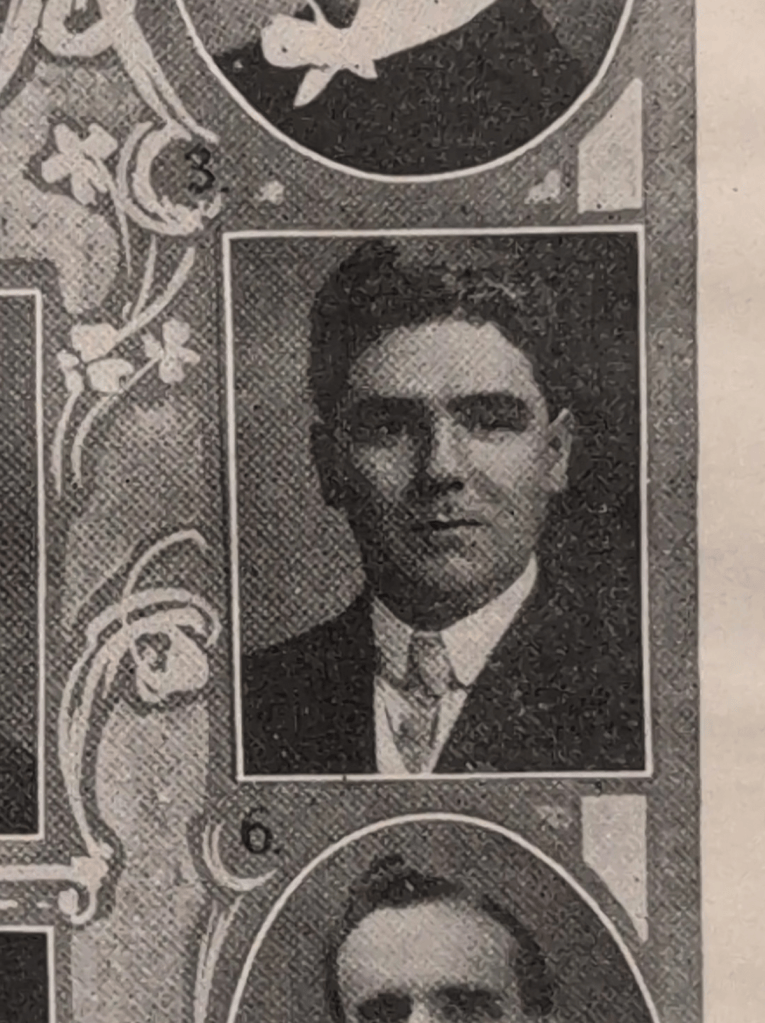
Courtesy: Twentieth Century Holiness Sermons By Twelve Active Ministers, Louisville, KY: Pentecostal Publishing, nd; Courtesy: C Fuller collection.
For MBiC City Mission Workers in Ontario, the Conference required reading Edgar Ellyson, Theological Compend, 11 an early Church of the Nazarene teacher, and therefore Arminian and Wesleyan in theology. This remained listed for examination until the Ontario Conference disbanded the CMW Society in 1946.
In the Pennsylvania Conference, where fundamentalist and Calvinist teachings were increasingly favoured, they obtained permission from the MBiC General Conference to use as an alternate text, William Evans, The Great Doctrines of the Bible.12 The book was also dispensationalist in eschatology.
In 1955, the UMC General Conference prescribed another older book: Charles Finney’s 1878 Systematic Theology,13 but they replaced it in 1962 with a newer Church of the Nazarene book edited by W T Purkiser called Exploring Our Christian Faith.14 Perhaps General Superintendent Kenneth Geiger, who was then moving the UMC toward more Wesleyan theology recommended it?
Finney’s book was another odd choice. Long before, his book on Revivals of Religion had been on the reading list for years, because, I am sure, he was a successful and widely-imitated revivalist. He had a particular related but non-Wesleyan holiness theology, sometimes called Oberlin holiness, since Oberlin was the College at which he taught for many years. He left the Congregationalism of his youth in an Arminian direction in the course of his evangelistic work and experience. Calvinists like to poke holes in his pragmatic ideas on free will and so on. He poked back.
Is there an EMCC theological community? The EMCC has various avenues to encourage theological unity in the congregations: preaching by her leaders, doctrinal statements to be accepted by pastoral candidates for licensing, ministerial seminars, hymns and choruses, prayer groups online, paper and electronic annual magazines, and theological colleges. Podcasts reign supreme these days, but who is producing them? Pastors and members have their favourites and few are Missionary Church/ EMCC produced. At one time we had a church magazine that re-enforced common theological views and held camp meetings where doctrines held in common were practiced by our preachers.
At the 1969 merger of the UMC and the MCA, the reading course finally ended. We hoped Bible schools and colleges would fill the gap in theological formation.
There is a saying I hate, a pun people like about seminaries being cemeteries. Even if it is sometimes true, it is a slander on the many schools that conscientiously try to provide godly, biblical theological education. They examine their curriculum constantly to improve it. I have attended three such schools, and taught in two others. It is unworthy of us to ever joke this way.
Unfortunately in eastern Canada, Emmanuel Bible College (1940-2024), for whatever reasons it had to be done, has recently been sold to another group and if they stay in Ontario, Canadian EMCC students whom God is calling must choose from schools of rather different theological stripes: Pentecostal, Baptist, Anglican, Lutheran etc, none of which offer full encouragement to the particular EMCC statements of faith, and in some cases the opposite. If our Articles of Faith are ignored as a theological resource, an official theological textbook at this time would probably not be much of a unifying source either: maybe the many horses of our theologies are already out of the barn(s).
The third post in this series will look briefly at textbooks I have known in some of the schools the Missionary Church has provided for its people, and attempt summary thoughts.
Banner: Some theology books. Courtesy: C Fuller photo, Sept 4 2026.
1EMCC History, February 9 and March 3 2026. “Forming the Ministry: The Probationer’s Reading Course Part 1” and “Part 2.”
2For example, Luther Lee, Elements of Theology: An Exposition of the Divine Origin, Doctrines, Morals and Institutions of Christianity 9th ed, (Syracuse, NY: Wesleyan Methodist Publishing House, 1883).
3Matthew Simpson, ed, Cyclopedia of Methodism rev ed (Philadelphia| Louis H Everts, 1880) p 535. The Wesleyan Methodist Connection is now part of the Wesleyan Church.
4https://prabook.com/web/luther.lee/1097493
5https://gameo.org/index.php?title=Good,_Cyrus_Nathaniel_%22C._N.%22_(1869-1967)
6William W Orwig, Heilsfuelle [“The Fullness of Salvation”] (Cleveland, OH: Evangelical Publishing, 1872).
7Edited by John C Symons, The Student’s Handbook of Christian Theology 2nd ed with a “life” of the author (New York/ Cincinnati, OH: Phillips and Hunt/ Cranston and Stowe, 1887).
8Field, p 224-241, esp p 230.
9Symons in Field, p xiii-xxvi.
10Marilyn Fardig Whiteley “Modest, Unaffected, and Fully Consecrated: Lady Evangelists in Canadian Methodism,” in Elizabeth Gillan Muir and Marilyn Fardig Whiteley, Changing Roles of Women within the Christian Church in Canada (Toronto: University of Toronto Press, 1995) p 188-189. A good gift and a treasure in the MCHT.
11Edgar P Ellyson, Theological Compend (Chicago, IL: Christian Witness Co, 1908).
12William Evans, The Great Doctrines of the Bible (Chicago, IL: Moody Press, 1912, 1939). Students of the Ontario Mennonite Bible School presented a copy to their school in 1948. A Mr Sauder acquired it in 1969, and somehow through EBC discards, to me/MCHT.
13Charles Grandison Finney, ed by J H Fairchild, Finney’s Lectures on Systematic Theology condensed edition, (Grand Rapids, MI: Wm B Eerdmans, 1957). Also reprinted in a further abridged edition.
14Westlake Taylor Purkiser, ed, Exploring Our Christian Faith (Kansas City, MO: Beacon Hill Press of Kansas City, 1960).


Leave a Reply