Continuing a survey of the intersection of fundamentalism and the Missionary Church.
My idea is that the early Missionary Church, at least the Mennonite Brethren in Christ, approved some of the theological aims of the fundamentalist opposition to liberal theology in the 20th century, but could not accept them all because of the Arminian, Wesleyan holiness and Mennonite convictions of the MBiC. This qualification has eroded over time as the Missionary Churches assimilated to mainstream “conservative” Christianity.
Possibly one other reason the MBiC did not join fundamentalist organizations officially was that the mainly rural denomination had Bible Schools, but no schools of higher education until 1947, hence no opportunities to harbour or fight about academic heterodoxy, usually the first step to innovation in the pulpits.1 It was not a burning issue. That doesn’t mean that members of the early EMCC didn’t support various fundamentalist projects, or that they were not aware of historical-critical conclusions.
At the beginning of the 1920s, only Jasper Huffman from Indiana was acquainted with the issues first hand. He resigned about 1918 from a school that he judged to be compromising with doctrinal orthodoxy and student discipline.2 The disappointment over the character of the school prompted the 1920 General Conference to convene a large committee to report on theological education. Their report reflected doubts in major sections of the Church about the soundness of any college education, saying the colleges known to them were “honeycombed” with “apostasy, rationalism, materialism, higher criticism, and other anti-Christian tendencies.”3
Notice of fundamentalist/ modernist themes began earlier than the 1920s, however. Early in Huffman’s time (1913-1924) as editor of the Gospel Banner, the denominational magazine, he reprinted without much comment two articles that were unorthodox, perhaps to provoke discussion. He made it clear later he did not believe them himself. Samuel Goudie, chair of the Ontario Conference (and chair of the Executive Committee of the whole Church) responded vigorously rejecting the outlook of both articles. Henry S Hallman, an earlier editor of the Gospel Banner, also flagged the first article as false teaching.4 The first reprint supported a cessationist view of spiritual gifts and the other rejected the doctrine of hell.
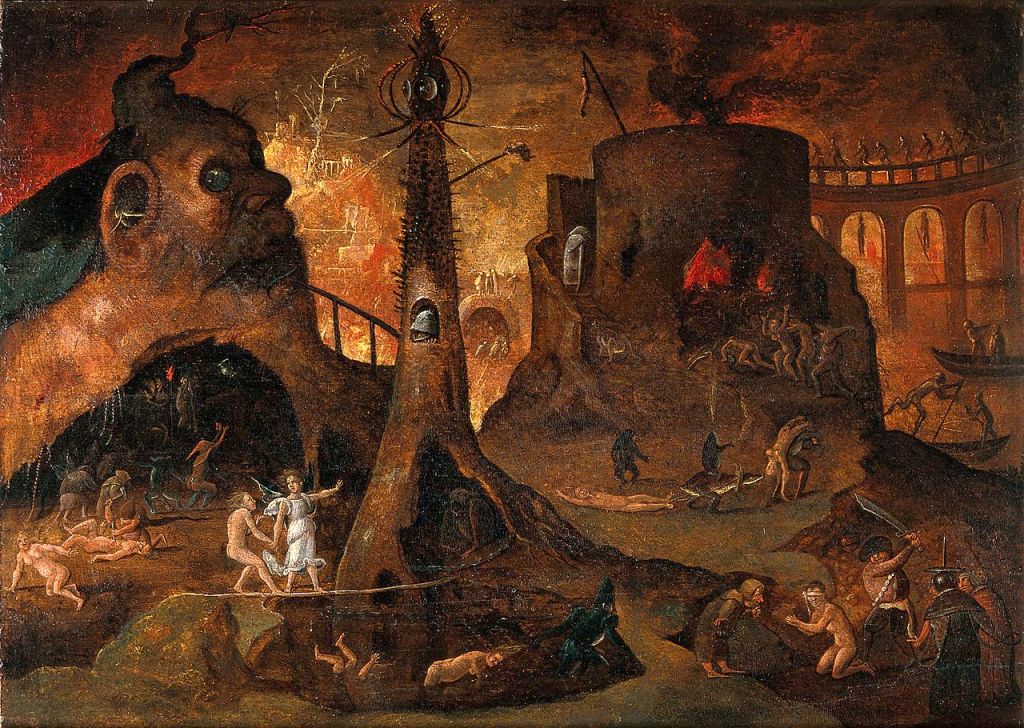
By a follower of Hieronymus Bosch, 16th century. Credit: https://commons.wikimedia.org/wiki/File:An_angel_leading_a_soul_into_hell._Oil_painting_by_a_followe_Wellcome_L0030887.jpg
The MBiC did not believe spiritual gifts had ceased. Some gifts were desired (eg healing) though others, eg tongues, were not often practiced, especially after the Pentecostal initial evidence theology was rejected in the 1908 MBiC General Conference at Brown City, Michigan. Goudie characterized the first article as “nothing less than Higher Criticism,” and the other as “rank Millennial Dawnism or No-hell-ism.”5 The writer of The Fundamentals article Vol 1 about Higher Criticism (Canadian Anglican Dyson Hague) cautioned about its misuse but the article in Vol 2 on Millennial Dawn teaching, by American Presbyterian William G Moorehead, (the Russellites, later called Jehovah’s Witnesses) rejected it completely. This suggests Goudie was reading them or about them.
In a random sampling of another year of the Gospel Banner, 1914, besides the usual holiness themes, anti-tobacco, anti-liquor and personal devotional topics, (and anti-war after August 1914) there were a number of articles devoted to explicitly “fundamentalist” doctrines. On January 29, the editor, Huffman, wrote on “The Divinity of the Bible,”6 followed up with “Another Triumph for the Bible.”7 More commonly, the magazine reprinted articles by others: “The Virgin Birth,”8 “Woman Sufferage,”9 “Fruits of Destructive Bible Criticism,”10 “Higher Criticism,”11 and “Evolution.”12 As a corollary of the fundamentalist agenda, they repudiated church councils or federations.13 In later years, opposition to a hypothetical formation of “one big world church” became a constant obsession of fundamentalism. Joining a World Council was a temptation the MBiC was hardly vulnerable to. The MBiC did join the American National Association of Evangelicals almost as soon as it formed in 1942, as many smaller Wesleyan and Pentecostal groups did.
In another year (1921), I found Ephraim Sievenpiper, an Ontario pastor, writing in defence of “fundamental questions,” in this case, “The Deity of Jesus Christ.”14 The editor, still Huffman, discussed the headings of the International Sunday School Uniform Lessons which the MBiC had been following for decades. The MBiC had been writing their own lessons for the headings, but he asked what were they to do with these: “Making the Nation Christian,” “Making the World Christian,” “Making the Social Order Christian,” and “The Social Task of the Church,” which were directly from the Social Gospel agenda, a product of liberal theology. Half of his editorial recounted the Bible’s teaching for community justice, and the second half supported that righteousness begins when individuals are converted, and not by passing laws.15 An article reprinted from the Eastern Gospel Banner denounced the push for women’s rights in classic fundamentalist fashion. The reprint was suggested by MBiC Indiana leader A B Yoder, strangely.16 This attitude is still promoted by many North American “conservative” evangelicals. As I mentioned in the last blog, fundamentalism, because of its strong Reformed origins, rejected female Christian public ministry.
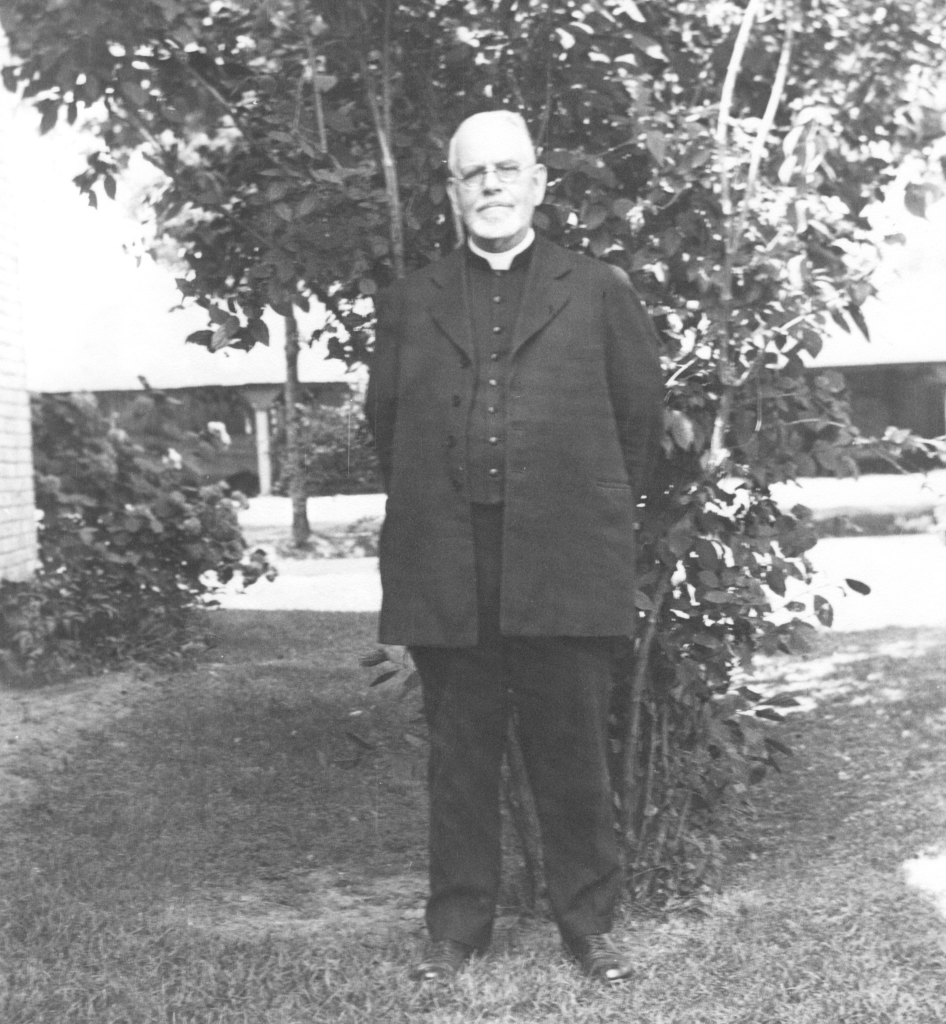
Peter Cober (1853-1941) referred to “fundamental doctrines” in an essay read to the MBiC ministerial association in Ontario in September 1924, however, his list consisted of repentance, regeneration and entire sanctification.17 And surely Cober was on to something, because these essentials are activities or responses of sinners and believers to the gospel, whereas the so-called fundamentals are not, rather, doctrines to be supported.
In 1928, Goudie reported, as the Presiding Elder of a district in the Ontario Conference of the MBiC, “Our laity and ministry stand together unitedly in doctrine. I know of no modernism or modernistic teaching among our people. We stand for the fundamental teachings of the Word of God.”18 Goudie was editing the Book of Religious Instruction in those years. He also treated the Deity of Christ in one of his few doctrinal essays for the Gospel Banner, consciously in opposition to theologians like Rudolf Bultmann who didn’t care what happened to the body of Jesus after the crucifixion.19
The editors of the Gospel Banner would likely see fundamentalists as allies in the propagation of the gospel, even if they did not embrace the program whole-heartedly, because fundamentalists certainly shared the goal of evangelizing the lost.20 The Church definitely believed in miracles. They reported healings in answer to prayer frequently. The miracles of the Virgin Birth of Jesus Christ, and the resurrection: no problem!
Atonement theology. I don’t see any uneasiness in the MBiC/ UMC with the “substitutionary atonement” tenet either. It easily flows from biblical sacrificial language. Other biblical explanations help cover important aspects of Christ’s atoning work.21
Millennium The “pre-millennial return” of the Lord Jesus to set up his kingdom was accepted as a new “hot gospel” teaching by the MBiC in the 1880s. They complained about the vagueness of Mennonite teaching as they knew it on the millennium. As I understand it, Menno Simons and the next generation Anabaptist leaders stayed away from millennial teachings as producing fanaticism and attracting the wrath of authorities. Their movement had been burned by some preachers’ wild and violent revolutionary speculations. Hence the admirable Dordrecht Confession of 1632, three generations or more after the Swiss Brethren in the 1520s, proclaimed (Article XVIII) the basic eschatology of almost all Christian Churches:22 Resurrection of the Dead, the Judgement by Christ, the final states of Heaven and Hell.23 The Confession elsewhere declares of Christ that “…he will come again…” (Article IV paragraph 4). This Confession, minus its article on the Ban, was accepted as the theological basis of union in March 1875 at Bloomingdale, Waterloo County when the Reforming Mennonite Society and the New Mennonite Church merged, precursors to the MBiC/ United Missionary Church.24

(Acts 1:11 and Matthew 25: 31). Courtesy: Fuller family photo
Inerrancy. A more subtle effect of fundamentalism was slower arriving in MBiC/ UMC/ Missionary Church Articles of Faith. The Dordrecht Confession was a doctrinal standard that North American Mennonites maintained. Unlike many Confessions and Articles that came out of the Reformation, it does not begin with a statement of authority, the Bible. In fact it has no article about the Bible at all (the Apostles’ Creed likewise). The Bible is quoted as the authority for beliefs and practices all through the Confession, however.
In the MBiC Discipline, Article VI stood for a long time as the only affirmation about the Bible: “The canonical books of the Holy Scriptures contain all the instructions necessary to salvation, and whatsoever is not contained therein, or cannot be proven thereby, is not to be required, or believed as an article of faith, neither to be received as necessary to salvation. John 5:39; II Tim 3:15-16.”25 The focus is entirely on salvation. The Article is almost word-for-word a quote of the 1562 Anglican Thirty-Nine Articles, Article VI, “Of the Sufficiency of the Holy Scriptures for Salvation”!
By 1965, however, a few more concerns were included and the familiar phrase “faith and practice” appears. The Bible is now “the authoritative Word of God.” It is revelation of God about man’s “origin, state and destiny—and his only means of salvation.”26 Many more scriptures were added in support.
In preparation for the merger of the UMC and the Missionary Church Association, in a proposed Basis for Union around 1968, the statement now included the phrase “inerrant in the original manuscript [later adjusted to ‘manuscripts’].” This language originated in the American Presbyterian Church Seminary at Princeton, New Jersey, from the Reformed theologians Charles Hodge, Benjamin B Warfield and continued by J Gresham Machen. Fundamentalists took up the phrase as we noted, and it became their test of Christian orthodoxy in North America. This statement remained in the Missionary Church Articles of Faith through 1988, when the Missionary Church of Canada was set up. I remember the motion in the Canada East District Conference which was asked to add another sentence, “It is true and reliable in all the matters it addresses.” I recognized this language reflected the Lausanne Covenant of 1979, which I highly approved, and was pleased the motion passed, as it did in the Canada West District, and in the USA Missionary Church. This same article about the Bible continued unchanged for 20 years into successive Evangelical Missionary Church Constitutions.27
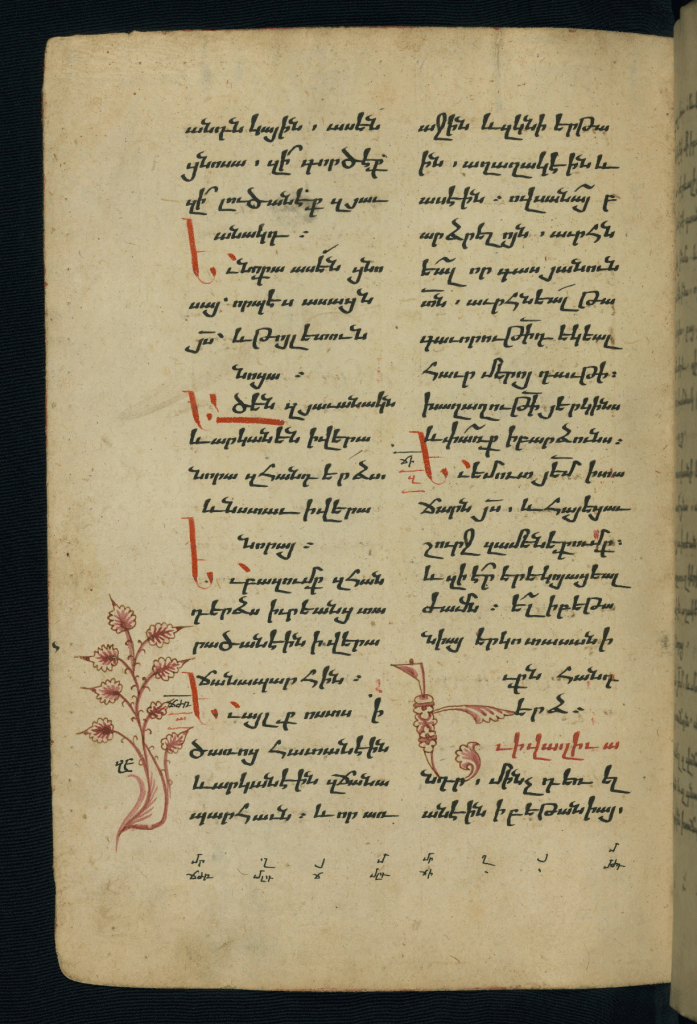
Credit, Wikipedia Commons,
https://www.flickr.com/photos/39699193@N03/8614792432/
Currently, the EMCC declares its faith in the 2013 Articles of Faith, which were revised in favour of, but not entirely, non-technical language. Though I sympathize with the intent and even the result, I have gone over this statement in great detail and regret the loss of theological terms that connect our teaching to the history of Christian thought. On the matter of “About the Bible,” the word “inerrant” was replaced by the closely related terms “infallible, entirely trustworthy” which are again more in line with the Lausanne Covenant, a change I do like.28 Interestingly, in 1989, the Missionary Church in the USA adopted “The Chicago Statement of Biblical Inerrancy” of 1978 in its first General Conference without the Canadian Church,29
By the later part of the 20th century, however, the old battles of modernism and fundamentalism, now conducted by other parties, shifting issues and under different names, seem to have continued and spread out, mixing with new conflicts and causing regrettable new harms. Theology is important; clarification is always an ongoing work. Love covers a multitude of sins.
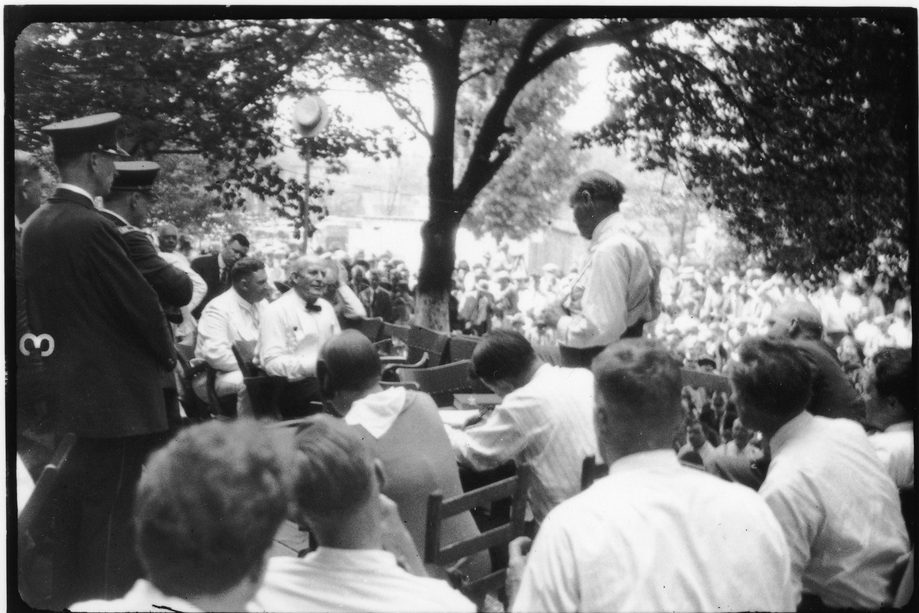
Banner: William Jennings Bryan being interrogated by Clarence Darrow, at the Scopes Trial. Credit: Watson Davis, photographer; Picryl Public Domain via Smithsonian Institution. https://picryl.com/media/tennessee-v-john-t-scopes-trial-outdoor-proceedings-on-july-20-1925-showing
1Mountain View Bible College (1926), Emmanuel Bible College (1940) and other such schools did not add degree courses for several years.
2Bluffton College; Lambert Huffman, Not of This World 2nd ed (Np: For the Author, 1965) p 89. A Mennonite discussion of the complex situation is in James C Juhnke, Vision, Doctrine, War: Mennonite Identity and Organization in America 1890-1930 (Scottdale, PA/ Waterloo, ON: Herald Press, 1989) p 260-269.
3“Report on Education,” Tenth MBiC General Conference (1920) p 31.
4Henry S Hallman, “Letter,” Gospel Banner (June 5 1913).
5Samuel Goudie, “Public Notice,” Gospel Banner (June 5 1913) p 10. Cessationism as such could have been supported by many Reformed/ Baptist fundamentalists, but the treatment of the Bible in the reprinted article was not evangelical.
6Gospel Banner (January 29 1914) p 2.
7Gospel Banner (March 5 1914) p 2.
8Wilson T Hogue, reprinted from Free Methodist, in Gospel Banner (March 5 1914) p 8. Hogue, a Free Methodist bishop, actually concentrated on the need for the incarnation, rather than arguments for the Virgin Birth as such.
9H C Holloway, from The Lutheran Observer, Gospel Banner (April 30 1914) p 12. Holloway was totally against women voting, saying women’s sphere was the home, and women could rely on men to repair any bad laws [!].
10John K Read, from The Lutheran Observer, Gospel Banner (May 21 1914) p 4-5.
11Anonymous, from The Christian Conservator, Gospel Banner (July 16 1914) p 5.
12The Christian Conservator, Gospel Banner (August 20 1914) p 5. The anonymous author thought Darwin (d 1882) renounced his theory before he died, a falsehood widely believed by evangelicals after 1915, and still promoted by young earth creationists.
13B G Wilkinson, “Threat of Church federation Tendencies,” by “Selected” [which meant it was reprinted from an unnamed source] Gospel Banner (August 20 1914) p 11-12.
14Gospel Banner (January 27 1921) p 9. Continued in (February 10 1921) p 9.
15J A Huffman, “Editorial,” Gospel Banner (March 31 1921) p 1.
16W G Gehman, “Women’s Rights,” Gospel Banner (March 31 1921) p 10, 12-13.
17Peter Cober, notes on his essay ‘Bible Land Marks that have Identified the MBC Church…,’ “Ministerial Conference Minutes 1917-1948,” p 52, Box 2500 MCHT.
18Samuel Goudie, “Presiding Elder’s Report,” Twelfth MBiC General Conference (1928) p 30.
19James Clare Fuller, Hidden in Plain Sight: Sam Goudie and the Ontario Mennonite Brethren in Christ (Eugene, OR: Hamilton, ON: Pickwick Books/ McMaster Divinity College Press, 2024) p 279.
20George M Marsden, Fundamentalism and American Culture: Shaping of Twentieth-Century Evangelicalism 1870-1925 (New York: Oxford University Press, 1980) p 43.
21John R W Stott, The Cross of Christ (Downers Grove, IL: InterVarsity Press, 1986) p 202-203.
22Roger E Olsen, The Mosaic of Christian Belief: Twenty Centuries of Unity and Diversity (Downers Grove, IL: InterVarsity Press, 2002) p 334-335.
23Dordrecht Confession, as printed in John C Wenger, The Doctrines of the Mennonites (Scottsdale, PA: Mennonite Publishing House, 1950) p 75-85.
24See EMCC History Page for the “Formation of the EMCC.”
25The Doctrines and Discipline of the Mennonite Brethren in Christ (New Carlisle, OH: General Conference Executive Committee, 1924) p 13-14.
26The Constitution and Manual of the United Missionary Church (Elkhart, IN: General Board and Publications Board of the General Conference, 1965) p 12-13.
27For example, Constitution (Evangelical Missionary Church of Canada, 2002) p 13.
28https://www.emcc.ca/resource-index/articles-of-faith
29Constitution of the Missionary Church (Revised and Authorized by the 1989 General Conference) p 3 and p 63-69.


Leave a comment