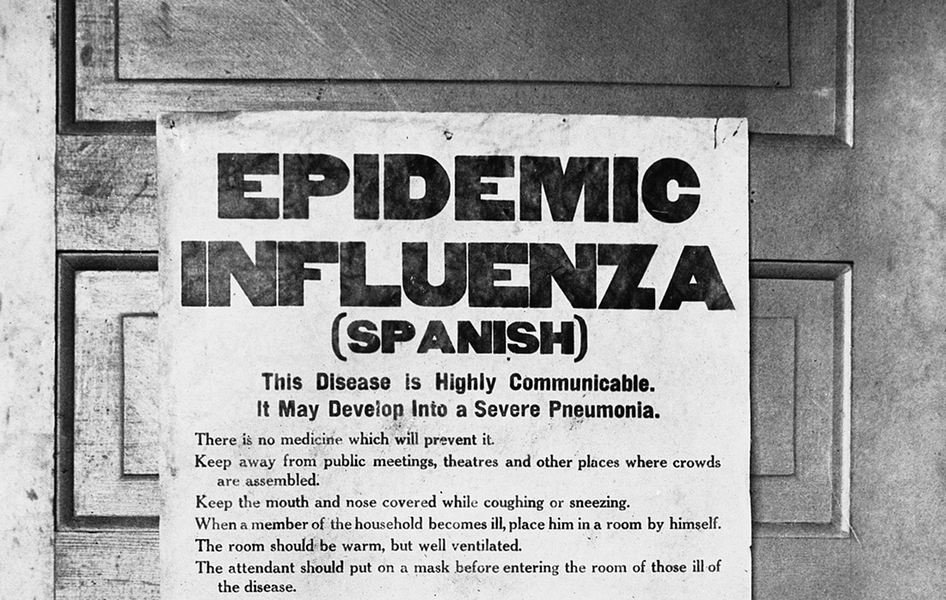
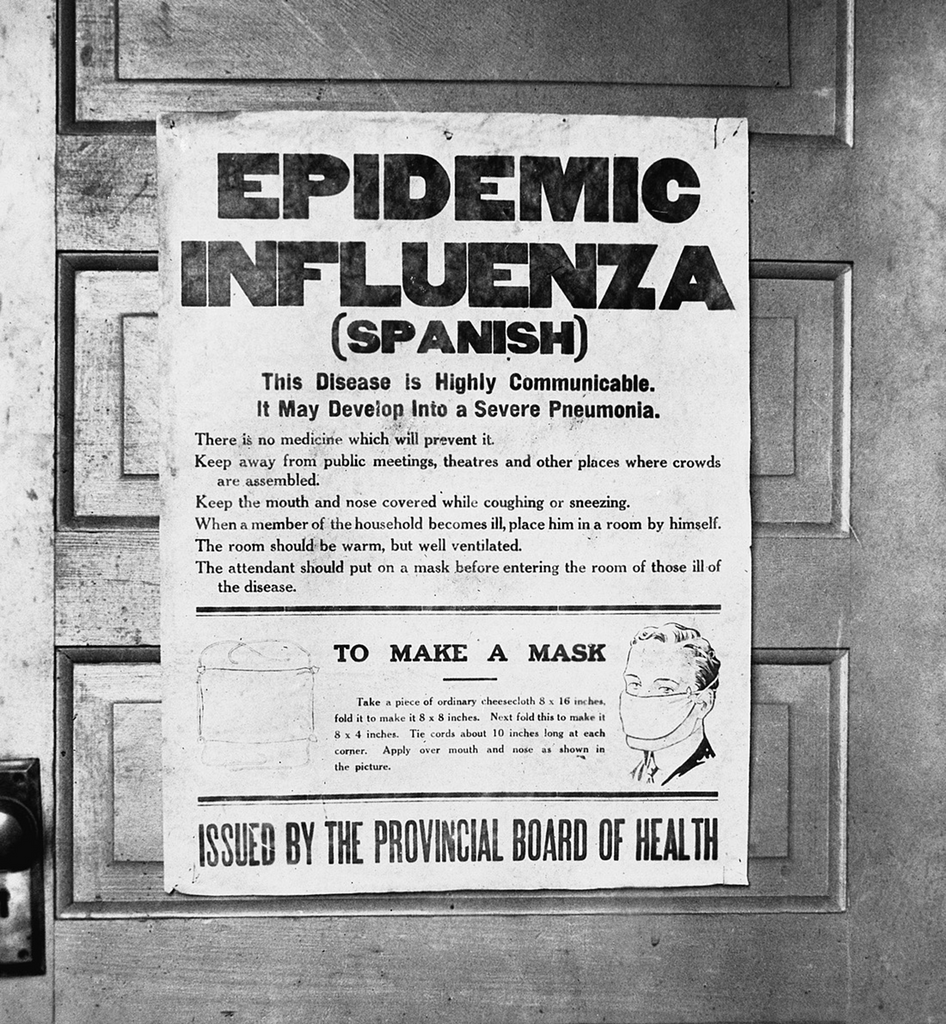
Spanish Flu. The COVID-19 pandemic is fading from memory already, but before it does, we should look back at North American Christian churches’ response to an earlier pandemic in 1918-1920. The pandemic affected nearly every country in the world and most families would have a back story involving it. But there is a big silence about the pandemic in many histories. It did not fit into any heroic medical narrative. It came and went, leaving destruction behind. How did the members of the early Evangelical Missionary Church of Canada in Ontario respond to the disease and the health measures mandated then?
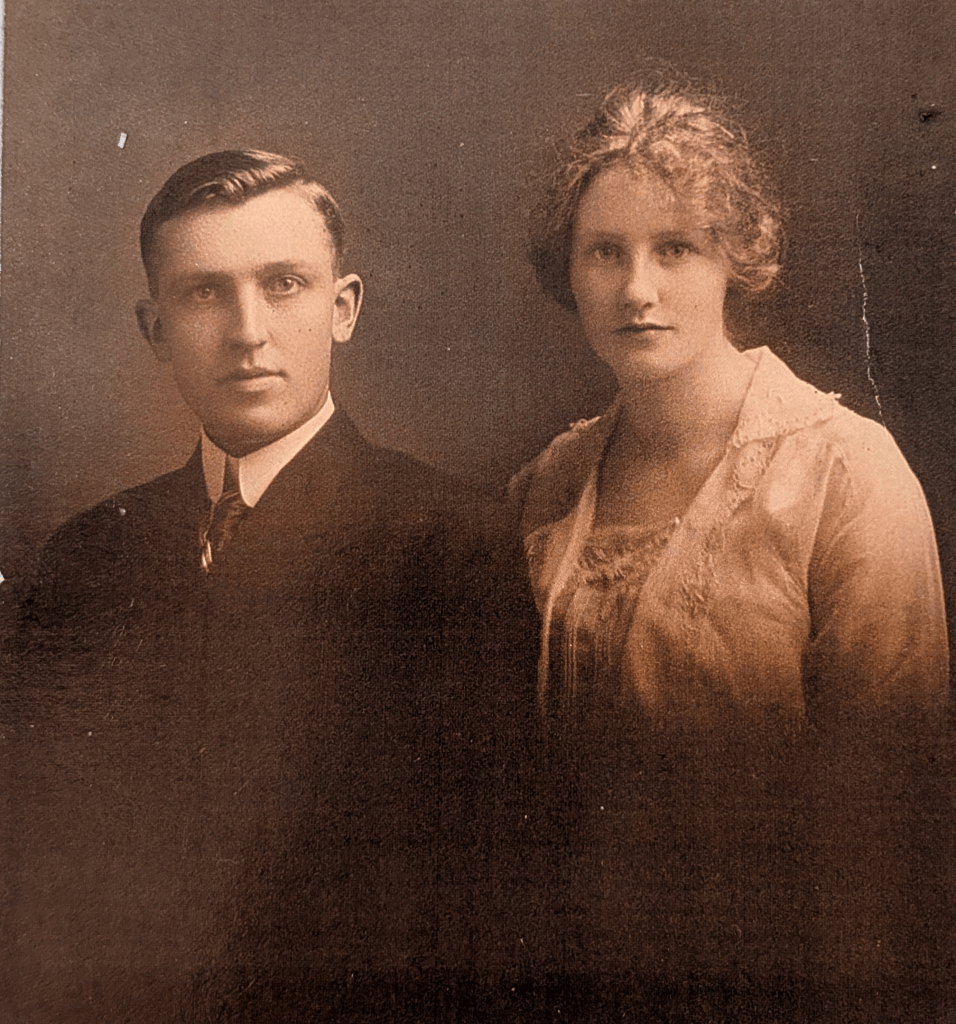
I probably exist, under God’s providence, because one of my grandfathers (Clare Cecil Fuller) became sick with the “Spanish” flu when he was in training to be a tank gunner in England in 1918. According to military records, he was treated twice over several months in English hospitals and never did see action in the war. We only learned of this in recent years when somebody went searching the internet for those records. After demobilization, Clare went back to the family farm on Zion Line, Warwick Township, Lambton County, Ontario, where I and my brothers and sisters met him and our grandmother, his English wife Sadie, still farming in the 1950s.
The influenza pandemic has been extensively studied by medical researchers.1 It is a major, if often ignored event in Canadian history.2 Many histories of Canada do not even mention it. A widely used university textbook on Canadian history only lists it in a chart. No explanation [J M Bumsted, The Peoples of Canada: A Post-Confederation History 2nd ed (Don Mills, ON: Oxford University Press, 2004) p 210]. Mark Humphries from Wilfrid Laurier University, Waterloo, published a much needed account in 2013.3
Yet almost as many Canadians died in the pandemic (about 55,000) in a few months, 8000+ in Ontario alone, as died in the four plus years of the war (almost 61,000).4 The cause was a variant of the H1N1 virus that is still in the world today. The virus, contrary to the current variants, was especially deadly to healthy young people between the ages 20-40 years (my grandfather was 19 when conscripted). Only in the 1930s was the cause proven to be a virus, not a bacteria, which scientists had assumed at the start of the war.
Although this is much debated, the most recognizable source of the particular virus’ spread seems to have been in a crowded US military camp.5 Troop movements quickly spread the disease all over the world, and millions died, as many as 60 million up to 100 million.6 As is often mentioned, the flu got the name “Spanish” because, as a country not involved in the First World War, Spain did not censor newspaper stories about it, as all combatant countries did.
In the Missionary Church family (the Mennonite Brethren in Christ Church), the first notice I have seen about the influenza outbreak was written by the MBiC doctor, Christian Nysewander, writing from Iowa, USA.7 Dr Nysewander frequently wrote short articles on health issues in the Gospel Banner, but in this case he conveyed fresh news about this disease, quoting American Surgeon General Dr Rupert Blue as his source.8 He recognized that the flu paved the way for bronchial pneumonia, which was the main killer. He also noted that this flu strain weakened the body—the immune system we would call it now.9 Many in the population lumped together various respiratory diseases such as colds and influenza calling them all “la grippe,” as MBiC Ontario Presiding Elder Sam Goudie often did.
A Gospel Banner report in November illustrates the path of the disease. A young rancher, from an MBiC family, was drafted into the US Army on October 22 1918. William Weiland Jr, 24, from Whatcom Township, Washington State, reported to his camp, Fort Worden. His end came swiftly; William was dead by November 3. Most of his company, 22nd Coast Artillery, contracted the virus and passed away.10 Death notices and obituaries in the Gospel Banner continued to record deaths of the very young and the elderly from various causes September to December, but the cause of death noted for people between 20 and 40 was influenza often followed by pneumonia.11
The influenza pandemic struck in three waves, it is generally understood: the first in the spring of 1918 mainly in military situations on both sides of the war. In the late summer it crossed into civilian as well as military circles. In the winter of 1919-1920, it staged a resurgence around the world.12
In Ontario on October 16 1918, public health boards announced bans on public meetings in hotels, theatres, schools, churches and such, but as it turned out, they were too late. The peak of infections was already past. In three weeks, the authorities in most areas lifted the ban, although in some places, such as Owen Sound, they waited 6 weeks.13 In Kansas, Emma Nickel and Phebe Overholt hoped the ban in their state would last only two weeks.14 The only later recollection I have seen in local church histories of the early EMCC in Ontario is from Stayner, where Edward Chester mentioned the Sunday School was closed for three weeks. (Not just the Sunday School would have been closed–every public meeting was.)15 After allowing meetings to resume, there was a second wave of infections in Ontario, probably caused by the relaxed mingling of people again.
Some regions in Ontario, such as the partly isolated Bruce Peninsula, did not have a wave of influenza until the winter. It roared through the communities, leaving families destitute when all of them became ill. A former president of the University of Western Ontario heard years later the story of the Anglican minister at Lion’s Head whom he calls “Parson James” taking a lead in community care when the only doctor in the district became ill himself.16 Charles Isaac Sinden was the MBiC pastor on the Peninsula 1918-1922.17 He and his wife, Lina Beatrice Brothers, would have been living at nearby Ferndale. They had charge of meetings at Ferndale, Miller Lake, Stokes Bay, Hays Settlement in those days, all in the central part of the Peninsula. They were helped by George C Jackson the first year, which is good, because Sinden was injured in an accident that year, exactly when the pandemic spread over his field. Charles Gingerich’s history mentions that pastors had to deal with smallpox and tuberculosis sometimes, but not influenza, but they must have.18 Military censorship did not inform people of the enormity of what they were experiencing. They did not know of the millions dying around the globe, and so misjudged the event as meaningless blip.

Sam Goudie, ever hopeful as a Presiding Elder, reported influenza “hinderances.”
Photo Courtesy MCHT.
Elsewhere in Ontario, Sam Goudie as Presiding Elder over the East District, reported that he served for C N Good at Vineland’s Quarterly Meeting because two of Good’s children were sick with the Spanish “flu.”19 A few weeks later, he reported that flu had hindered Ephraim Sievenpiper, who was new to the Bethel Mission (West End or West Toronto), but that “this epidemic has been checked & things are becoming normal again.” At the other Toronto mission, Jones Avenue, Rebecca Hostetler, 37, was the new leader: “She was hindered some by an attack of the “flu,” but is well again.”20 In the same issue, evangelist John Stacey, labouring under the instruction of a Presiding Elder and reporting on protracted meetings on Manitoulin Island, blamed four things for poor results: “There were four reasons particularly which hindered our meetings: an election, bad weather, the “flu,” and the devil…”21 The “election” is probably the one that saw MBiC local preacher Beniah Bowman from the Island, win a seat in the Ontario Legislature for the United Farmers of Ontario in an October 1918 by-election (an election needed to fill a vacancy in the Canadian system).22
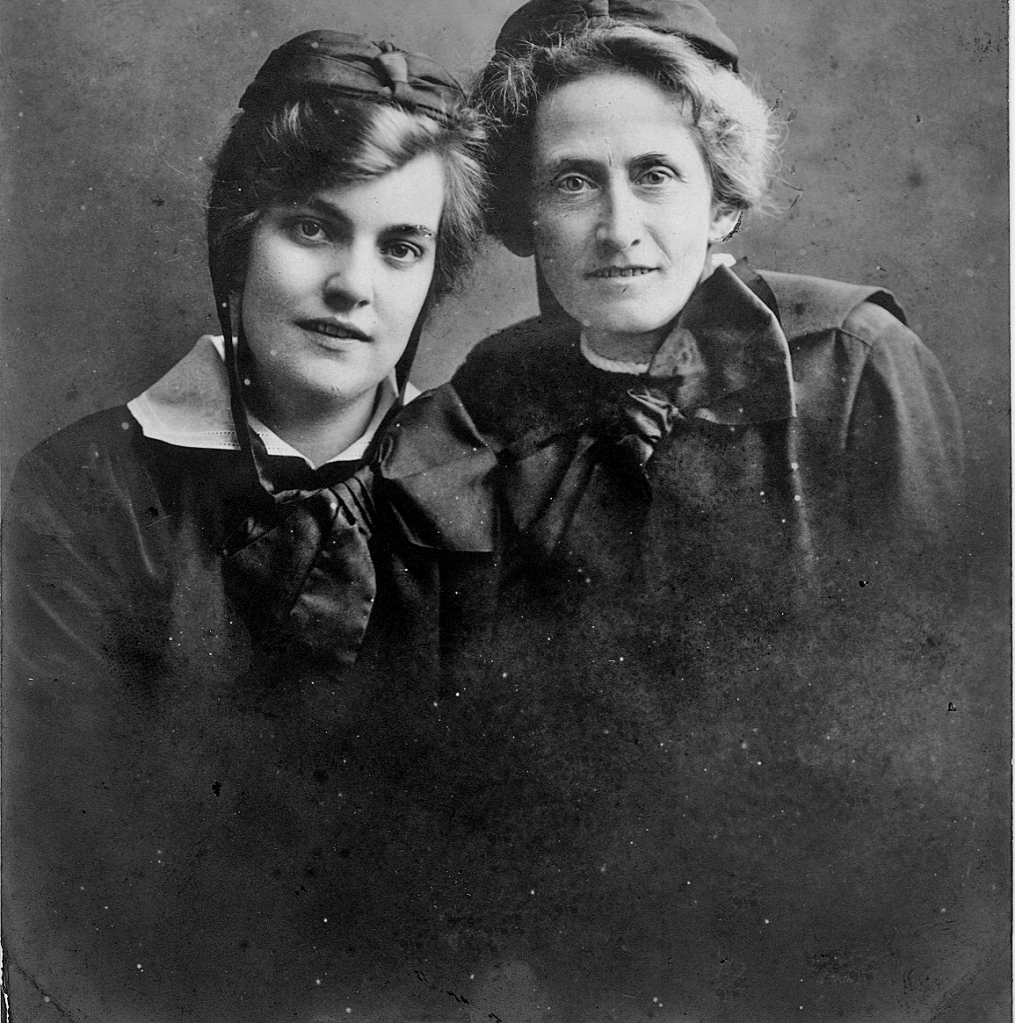
John Kitching was not well in the fall of 1918 and asked to be relieved of the strenuous Toronto mission he had led. The annual conference sent him to reopen an appointment on the rural Scott field (Mt Pleasant at Zephyr), which had not been served for some time. He enjoyed the quieter nights and better sleep. However, the parsonage had been unoccupied for 3 years and the few members able to help clean it up provided only minimal assistance. The “flu” had hindered affairs.23 But Kitching was encouraged by faithful members and larger congregations and Sunday schools when the services restarted.24 He replaced John Bolwell who had lived at Edgeley apparently, quite some distance away. Bolwell was reassigned to Stouffville where he, too, found services closed for two weeks “on account of the prevailing sickness.” [Gospel Banner (November 7) p 13.] In the same issue, Flavius J Lehman at Vineland also noted the closing of services “for a few weeks.”
“Hindered” is the word MBiC writers thought of when commenting on the “prevailing” influenza situation. There were reasons in addition to Anabaptist reserve for this mild language, as we will see in the next post.
Banner: Poster from the Alberta Board of Health banning all public meetings in 1918. Credit: Picryl public domain images
1https://en.wikipedia.org/wiki/Spanish_flu
2(2019) https://parks.canada.ca/culture/designation/evenement-event/grippe-espagnole-spanish-flu
3Mark Osborne Humphries, The Last Plague: Spanish Influenza and the Politics of Public Health in Canada (Toronto: University of Toronto Press, 2013).
4Janice Dickin, Patricia G Bailey and Erin James-Abra (2020), “1918 Spanish Flu in Canada,” https://thecanadianencyclopedia.ca/en/article/1918-spanish-flu-in-canada
5Howard G Coombs (2022), “Military Lessons of the Influenza Pandemic of 1918,” https://en.wikipedia.org/wiki/Spanish_flu. A more technical description of the influenza’s recognition and spread may be found in Mark Honigsbaum, The Pandemic Century: One Hundred Years of Panic, Hysteria and Hubris (London: Hurst and Company, 2019) p 1-35, ch 1, “The Blue Death.”
6John M Barry, The Great Influenza: The Story of the Deadliest Pandemic in History revised edition (Random House/ Penguin Books, 2018) p 7.
7Nysewander is one of the four MBiC members, though not ordained, who were profiled in the MBiC history for their services to the Church; Jasper A Huffman, ed, History of the Mennonite Brethren in Christ Church (New Carlisle, OH: Bethel Publishing, 1920) p 276.
8Rupert Blue, “Spanish Influenza,” “Three Day Fever,” “The Flu,” (Washington, DC: Government Printing Office, September 1918).
9Christian Nysewander, “Spanish Influenza,” Gospel Banner (September 26 1918) p 8.
10“Deaths,” Gospel Banner (November 26 1918) p 18.
11Wallace, ON-born Annie Jane Bowman, 27, who died in Stonelaw, Alberta; Brother Noffsinger, 33 (Indiana); and Alice Walton (Nebraska, but died in Colorado), about 35, Gospel Banner (November 21 1918) p 13-14.
12Barry, p 601, 630.
13John Lutman, (2020), https://diohuron.org/news/pandemics-in-huron-now-and-then
14Emma Nickel and Phebe Overholt, “City Mission—Topeka, Kansas,” Gospel Banner (October 24 1918) p 13. In Pontiac, Michigan, Oliver B Snyder mentioned services had already been closed 5 weeks (November 21) p 12.
15Edward Chester, Great is Thy Faithfulness: Centennial Celebration (Stayner, ON: Stayner Missionary Church, 1990) p 8.
16William Sherwood Fox, The Bruce Beckons: The Story of Lake Huron’s Great Peninsula (Toronto: University of Toronto Press, 1952) p 211-214.
17Charles S Gingerich, The Peninsula Pilgrims: A History of Bethel Church (Lion’s Head, ON: RDP Graphics, 2007), p 97.
18Gingerich, p 55. The outside world did not affect local minutes much: they did not even mention World War 1! Ferndale parsonage: p 59.
19Sam Goudie, “Reports—PE—Ontario Conference,” Gospel Banner (October 24 1918) p 12.
20Sam Goudie, “Reports—PE—Ontario Conference,” Gospel Banner (November 26 1918) p 12.
21John Stacey, “Evangelistic,” Gospel Banner (November 26 1918) p 12.
22EMCC History, “UFO Politician: The Honourable Beniah Bowman,” posted December 28 2024.
23John N Kitching, “Missions—Scott Mission,” Gospel Banner (December 5 1918) p 14.
24On the origin and achievements of the Scott Mission, see James Clare Fuller (2022), https://gameo.org/index.php?title=Zephyr_Missionary_Church_(Zephyr,_Ontario,_Canada)


 EMCC History
Leave a reply to Bruce Snyder. MD Cancel reply