The EMCC today may seem like a generic evangelical church to some attenders, perhaps teaching therapeutic techniques, listening to non-denominational evangelical podcasts and singing pop evangelical worship songs, but it did not seem so to its first generations. The early EMCC was a consciously Wesleyan holiness (and Mennonite) church. Holiness in the Wesleyan tradition has long roots in Christian piety.1 Anglicans George Whitefield,2 John and Charles Wesley and their “Holy Club” at their University in the 18th century continued an earnestness on the part of some in England to lead a devout and holy life.3 John Wesley’s followers (such as John Fletcher) in the Methodist Society perpetuated and expanded or defended the expectation of “Christian perfection,” or “perfect love,” (I John 4:18) as a goal, if not the goal, of this life. Wesley, who liked explanations to be plain, defended his reading of Scripture in the compilation called A Plain Account of Christian Perfection.4 During the 19th century in the United States, Methodism underwent some changes that on one side, turned the movement into mainstream theologically liberal Christianity, and on the other, toward a renewal and modifying of the original, I would claim, evangelistic and holiness emphasis, splintering into a myriad of new denominations, such as the Church of the Nazarene, Pilgrim Holiness Church, Church of God (Anderson, IN) and in Canada, the Holiness Movement Church.5 As always some remained as evangelical Methodists in the parent denominations.

Credit: Wikimedia Commons, public domain
Renewal supporters such as Phoebe Palmer from New York, USA, encouraged her fellow Methodists to trust God’s call and power to attain the second blessing, as it was called.6 She added a little twist to sanctification teaching by her saying that “the altar sanctifies the gift.” In other words, there is no need to tarry a long time until one obtained the assurance of being sanctified (though that would be nice), but earnest consecration—leaving one’s self on the altar (Romans 12:1-2)–was sufficient.7 One whom she led to the experience of full consecration in 1849 was Benjamin T Roberts (1823-1893), who in 1860 became a founder of the Free Methodist Church.8 Palmer set off an unexpected revival which began in Hamilton, Ontario, in 1857 which has been called the Second Great Awakening.9 Phoebe and her husband, Dr Walter Palmer visited England in 1859 and made many followers during their years there.
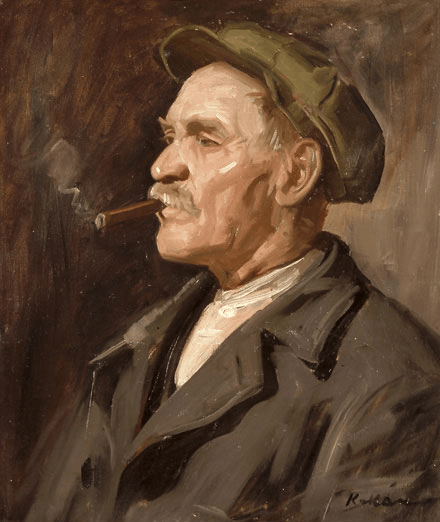
(and unhealthy), long before its link to cancer was demonstrated.
Credit: Wikimedia Commons public domain
The negative call. Along with the positive call to holiness: “the simple life-style as a requirement for holiness,” there was the negative call: to reject “ornate churches, rented pews, expensive clothes, and gaudy jewelry.”10 (Is it perverse to suppose there is non-gaudy jewelry?) In “A Covenant of Entire Consecration” proposed in her book Entire Devotion to God (1845, reprinted in many editions), Palmer promised “…minute circumspection in the sustainment and adornment of my body, to indulge in only such things as may be enjoyed in the name of the Lord….” Concerning raising children, she resolved to instruct them on laying up treasure in heaven, rather than “in view of fitting them to make a display in the world….”11 As a woman and a mother, she obviously thought about this. In the minds of some followers, close inspection of food and clothing choices could become a legalistic burden or its opposite, a thoughtful tool to an effective servanthood to Jesus.
B T Roberts, from New York State, complaining of a change in the times, said, “Now, many take no decided stand against pride and worldly conformity.”12 The book from which this statement comes was owned by Alvin Traub (1883-1966), an early Presiding Elder of the MBiC Canada Northwest Conference, 1919-1932, and founder of Mountain View Bible College, Didsbury, AB. Roberts condemned holiness groups (he spoke mainly of his first denomination, the Methodist Episcopal Church) for raising funds for church buildings by fairs, festivals, lotteries and pew rents, which he considered serving pride and the well off. He even faulted camp meetings for preaching holiness while avoiding condemnation of displays in clothing, in feathers, gold and jewelry as they used to ignore the evil of slavery.13

Canadian Free Methodists (organized in 1876), with some of the earliest members recruited from the smaller Canadian Methodist denominations such as the Methodist New Connexion, Primitive Methodists, Methodist Episcopals and Bible Christians, continued their founders’ concerns, which they believed went back to John Wesley and beyond him, to the Bible.14

Credit: A Sims, Yet Not I: A Brief Sketch of My Early Life…(nd)

Albert Sims, a Free Methodist evangelist/publisher from Ontario,15 warned against Church Entertainments, Secret Societies, Fashionable Suicides (tobacco, corset wearing), Dancing and Skating Rinks, Dress, among various offensive or dangerous customs.

In “The Church Walking with the World,” a poetical allegory in his book Bible Salvation and Popular Religion Contrasted, Sims warned of the compromises threatening the Churches.16 Henry S Hallman, Mennonite Brethren in Christ editor from 1888 to 1908, sold Sims’ books from the Gospel Banner office in Berlin (Kitchener), ON. He considered the doctrines of the Free Methodists to be the closest to that of the MBiC.17 Such advocates of holiness were quite ready to condemn worldly conformity by other Christians, so far as to deny some could be Christians at all. Consequently, Wesleyan holiness denominations have been characterized as negative, sectarian, legalistic, having a privatized morality, and a feeble social concern. Lack of social concern was a charge refuted by Timothy Smith.18 Sometimes the churches merited some of the other cautions.
God’s Bible School. A few people who served in the MBiC attended the independent holiness school in Cincinnati, Ohio, USA, set up in 1900 by Martin Wells Knapp (1853-1901), called God’s Bible School.19

Credit: M W Knapp, Lightning Bolts from Pentecostal Skies: The Devices of the Devil Unmasked (1898)
One other student was William Seymour, the Black Methodist pastor who led the Azusa Street mission in Los Angeles, California, which greatly stimulated Pentecostalism.20 Alfred G Ward, a Canadian Methodist from Ontario who became an agent of the Christian and Missionary Alliance for Western Canada was a student, at the same time as George A Chambers, a convert through a Christian Workers Church in Toronto. Both men became preachers for the MBiC Ontario Conference.21 Both became prominent in the Pentecostal Assemblies of Canada. Ontario-born Alvin Traub grew up in the west, also attended.22 Traub testified to the experience of sanctification throughout life.23
In a 1900 book, co-published in Canada by Albert Sims, Knapp took nasty digs at preachers who accepted honourary degrees: “D. D., LL. D., and similar titles were not born of God, nor of Holy Ghost revivals, but of the schoolmen and the world.”24 The account of the harlot Babylon in Revelation chapter 18 gave him an opportunity to denounce the most wicked practices of “worldly ecclesiastical and political governments,” especially churches whose “so-called places of worship are open for worldly lectures, worldly concerts, worldly theaters, worldly fairs, worldly festivals and other worldly amusements….”25
I do not feel a need to defend all Wesleyan holiness or Mennonite teachings on specific behaviours for a holy life. J C Wenger also cautioned against trying to codify all possible acts.26 I give these by way of illustration. Some requirements were plainly absurd or worse. I agree with many of their concerns, but as I learned from my Cultural Anthropology teacher, Eileen Lageer, culture is an ever-shifting scene with shifting meanings, and what in one society is offensive is not in another in a different time and place.27 This can be illustrated over and over. Observant missionaries who have a theology of culture meet this all the time.
Nevertheless, follow the logic: if God has a certain relation to the world (here I mean “the world” as the human system opposed to God as in I John 2:15, not John 3:16 which is the only place in the Bible where I can find it says “God loved the world”), then you would think a Christian or a Christian community would want to conform their relations to the world to God’s ways. This is the concern of those Christians who insist on nonconformity to the world. Romans 12:2 in the English Authorized Version suggested the term: “Be not conformed to this world….”28 I John 2:15-16 (“Love not the world, neither the things that are in the world. If any man love the world, the love of the Father is not in him,”) and I Peter 2:11 (“I beseech you as strangers and pilgrims, abstain from fleshly lusts…”) were seen as commanding the same. The Greek word translated “conformed” in Romans 12:2 is translated “not fashioning yourselves to the former lusts…” in I Peter 1:15 in the AV.29 These instructions of the Scriptures must have a way of being obeyed by the Church at any time or place. But it has not been easy to discern how.
Follow up with the next blog: EMCC History: “Nonconformity to the World Part 3: the Mennonite Brethren in Christ Experience.”
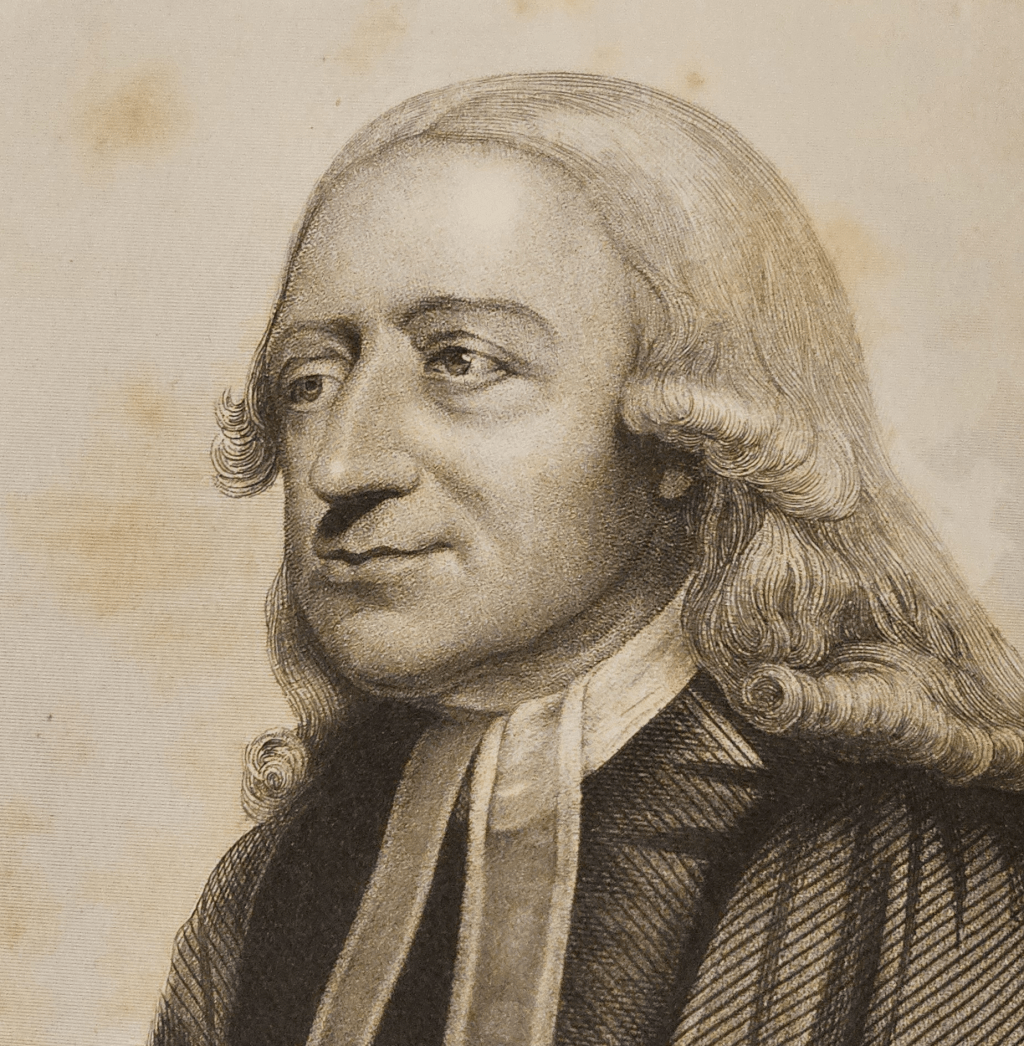
Banner: A familiar face: John Wesley, Credit: Engraving in P Douglass Gorrie, Lives of Eminent Methodist Ministers (1856)
1See forthcoming EMCC History Blogs “Pietism, head and heart,” and “Pietism” for a start.
2Whitefield’s Calvinism demonstrates that earnestness in living the Christian life is not the playground of Arminians only.
3For example, works by Jeremy Taylor, Rule and Exercises for Holy Living (1650), and William Law, A Serious Call to a Devout and Holy Life (1729). An excellent overview of England’s religious state at the start of the 18th century is in Arthur Skevington Wood, The Inextinguishable Blaze: Spiritual Renewal and Advance in the Eighteenth Century (Exeter, UK: Paternoster House, 1960).
4My copy, once owned by Michael Troyer, probably a member of the MBiC Vaughan Twp appointment at Edgeley, is John Wesley, A Plain Account of Christian Perfection (Toronto: Samuel Rose, 1876), printed at the Methodist Conference Office, Toronto. Wesley first published the booklet in 1766, but revised and republished it in 1777. This version became the definitive edition. For many years, it was required reading for Methodist preachers and as a doctrine required to be believed; https://kevinmwatson.com/2013/05/27/christian-perfection-the-reason-for-methodism/
5A good overview would be that by John L Peters, Christian Perfection and American Methodism (Grand Rapids, MI: Francis Asbury Press, 1985 reprint of 1956). John N Oswalt, Called to be Holy: A Biblical Perspective (Nappanee, IN: Evangel House Publishing, 1999) would be one of many more recent restatements of a Wesleyan holiness position on sanctification. This book tends to emphasize the personal dimension of holiness and not the corporate, world system-rejecting side.
6Charles Edward White, The Beauty of Holiness: Phoebe Palmer as Theologian, Revivalist, Feminist, and Humanitarian (Grand Rapids, MI: Francis Asbury Press, 1986).
7White, p 23.
8“Second” to the blessing of justification; White, p 42.
9Others count them differently. Detailed convincingly in Sandra L King, The 1857 Hamilton, Ontario Revival: An Exploration of the Origins of the Layman’s Revival and the Second Great Awakening (Eugene, OR: Pickwick Publications, 2015). Obviously Phoebe did not energize the Awakening alone: many were praying and working for renewal in various ways. God gave the increase.
10White, p 44.
11White, p 247.
12Benjamin T Roberts, Holiness Teachings (North Chili, NY: Earnest Christian Publishing House, 1893) p 35. “Worldly conformity” is an obvious allusion to Romans 12:2.
13Roberts, p 38-39.
14John Wilkins Sigsworth, The Battle was the Lord’s: A History of the Free Methodist Church in Canada (Oshawa, ON: Sage Publishers, 1960) p 45-46. See also R Wayne Kleinsteuber, More Than a Memory: The Renewal of Methodism in Canada (Mississauga, ON: Light and Life Press Canada, 1984) p ix-xvii.
15Sigsworth, p 23.
16Albert Sims, Bible Salvation and Popular Religion Contrasted 4th ed (Toronto: By the Author, 1886).
17I have been unable to retrace where I read this.
18Timothy Smith, Revivalism and Social Reform in Mid-Nineteenth Century America (New York: Abingdon Press, 1957), often reprinted with a different subtitle.
19 https://en.wikipedia.org/wiki/Martin_Wells_Knapp See the biography of Sam Goudie by Clare Fuller, Hidden in Plain Sight, published by McMaster Divinity College Press via Pickwick Publications (Wipf and Stock, 2024)) for more details, chapters 6-8.
20 James Craig, PAOC archivist, personal communication, 2019.
21More details in the EMCC History, “The Strange Case of the MBiC East End Mission.”
22Earl Reimer, Alvin Traub: Iron Will and Silver Hammer (Elkhart, IN: Bethel Publishing, about 1960).
23Gladys Eby and Everek Storms, “Alvin Traub Founded Mountain View Bible College,” Gospel Banner (February 1966) p 14.
24Martin Wells Knapp, Holiness Triumphant; or, Pearls From Patmos: Being the Secret of Revelation Revealed (Toronto: A Sims, Publisher, 1900) p 13. The copy I have seen was also owned by Alvin Traub, 1st pastor at Alsask, SK, in 1916 when he obtained the book.
25Knapp, p 191-193.
26John C Wenger, An Introduction to Theology: A Brief Introduction to the Doctrinal Content of Scripture Written in the Anabaptist-Mennonite Tradition rev ed (Scottdale, PA/Kitchener, ON: Herald Press, 1975) p 224. That advice has never stopped churches from trying.
27 Our text was Stephen Grunlan and Marvin K Mayers, Cultural Anthropology: A Christian Perspective (Grand Rapids, MI: Zondervan, 1976). See also Paul G Hiebert, Anthropological Insights for Missionaries (Grand Rapids, MI: Baker Book House, 1985) p 30-54.
28I have heard many preachers and seen numerous writers commend J B Phillips’ translation of Romans 12:2: “Don’t let the world squeeze you into its mold.” It’s pretty good.
29Suschematidzesthe; a verb used only two times in the NT.


Leave a Reply