I wrote a lot about John Wesley (1703-1791) and his theology of assurance in EMCC History, “Blessed Assurance Part 1.” But the forebears of the Missionary Churches and the EMCC in the 19th century did not learn of Wesley’s teaching directly from Wesley’s writings. In fact I have little evidence they read his works at all in the first generations of the Mennonite Brethren in Christ Church. The Gospel Banner printed short quotes and sometimes longer reprinted articles, but not much original on Wesley.1
Instead these Mennonites met Wesleyan theology from the 19th-century North American Methodist movement around them. They heard it in the preaching, prayer and camp meetings, and read it in the magazines of the Episcopal Methodists, Wesleyan Methodists, and Free Methodists in English, or the Evangelical Association, the United Brethren in Christ Church, and perhaps the Moravian Church in German. They met the doctrine in the gradually coalescing numerous Wesleyan holiness societies and new denominations.2 The experience of perfect love/ sanctification/ second blessing/ holiness dominated the emerging Mennonite Brethren in Christ Church, but assurance of faith or the witness of the Spirit was acknowledged the prior experience. “Tears flowed freely as people proceeded through the confession of sin to the joy of forgiveness and the infilling of the Holy Ghost,” wrote Wayne Gerber.3
Wesley believed the “genuine witness could be tested by several criteria: it must be preceded by repentance, which in turn must be followed by a ‘vast and mighty [ethical] change,’ The scriptural marks of joy, love, and obedience to the law of God must follow.”4 The assurance releases the believer to serve the Lord Jesus with great calmness and power.5 The believer is not distracted by self-doubts nor waste time and energy on introspection. This was the testimony of a number of early leaders in the Missionary Church, in the USA and Canada. Jasper A Huffman said of the first generations, “Every person was expected to “seek” until he deliberately experienced this change of heart.”6 This was the search of preacher Daniel Hoch in the Mennonite community at The Twenty in the Niagara Peninsula before 1838.7 Hoch’s efforts led to the organizing of the New Mennonite Church in Ontario, with short-lived offshoots in New York, Ohio and Michigan about 1852. It was involved in the discontent of Mennonite preachers in Markham Township, York County, Christie Troyer, Jr, and Abraham Raymer, who founded the New Mennonite Societies there in the 1850s.8 Samuel Schlichter in New Dundee (Wilmot Twp, Waterloo) and Blenheim in neighbouring Oxford County, separated from his Mennonite Conference origins by preaching on the necessity of having a definite conversion experience.9
It is no mere coincidence that these decades were the peak of the pioneer Methodist expansion in Upper Canada (=Ontario),10 which irritated the dominant denominations as the Pentecostals did to the holiness denominations in the early 20th century.
Later in life, the Methodist John Carroll recalled his conversion in August of 1823 or 24 when he was about 15 in York (Toronto). After months of striving to attain salvation–loud cries in the woods in prayer and reading the Bible and his hymnbook, he gained, without knowing it at the time, the witness of God’s Spirit in the morning sermon when the preacher spoke of what God has done for us “…and after the evening sermon I had the witness of my own spirit [the sermon was on what God does in us]. How truly did I now go on my way rejoicing!”11 Carroll (1809-1884) went on to a career of developing new Methodist congregations in Ontario and chronicling his fellow preachers and their labours in books such as Case and his Cotemporaries.
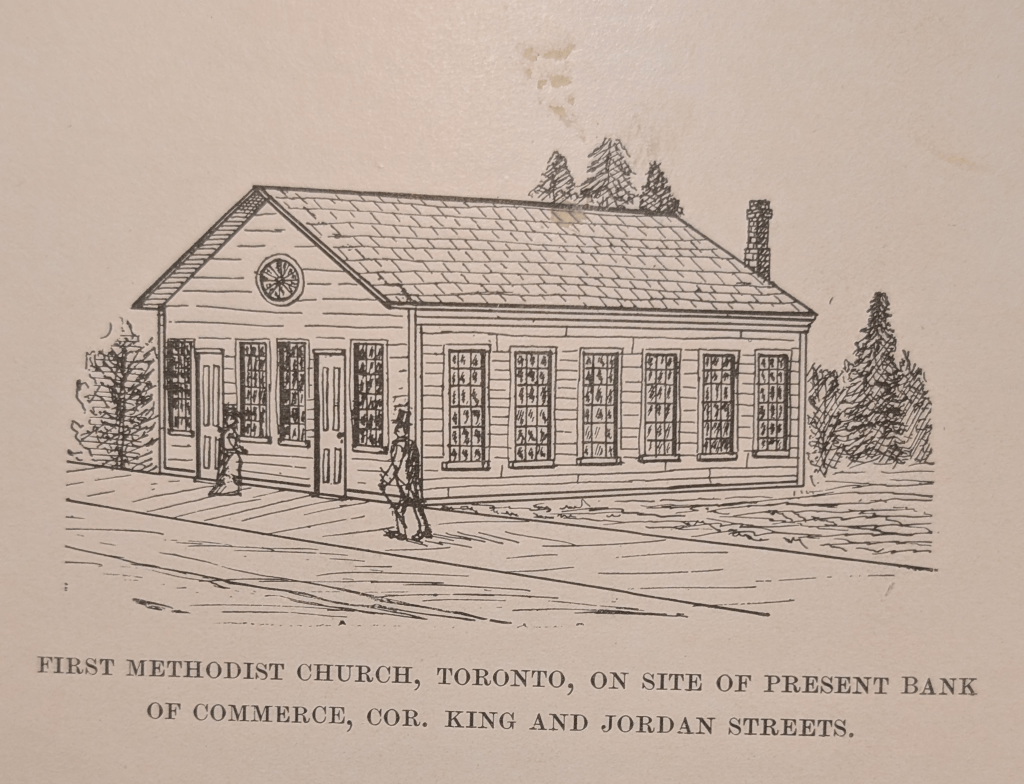
Using the German language, the Church of the United Brethren in Christ had preachers in the Niagara Peninsula and in Waterloo County in the 1820s and 1830s with definite organization coming in the 1850s,12 while the Evangelical Association was active from the 1830s and the 1840s in the same areas and York County as well. Their full organization in Ontario occurred in 1863.13 After some disruptions, the Evangelical Association became the Evangelical Church in 1922, still maintaining its statements about assurance in Wesleyan fashion: the witness of the Spirit, with reference to Romans 8:14-16, and the observable signs of sanctification. EC bishop Samuel Spreng wrote that while time and place of our spiritual birthday may not be identifiable, “[i]t is material that we have the testimony of the Holy Spirit agreeing with and confirming our own consciousness that we have become the children of God.”14 Even after the EC merger with the United Brethren in Christ (New Constitution) of 1946, the EUB “Confession of Faith” included a section basically a paraphrase of Wesley’s definition of the Witness of the Spirit from his second sermon on that teaching, “an inward impression on the soul, whereby the Spirit of God, the heavenly Comforter, immediately convinces the regenerate believer that he is passed from death unto life, that his sins are all forgiven, and that he is a child of God.”15
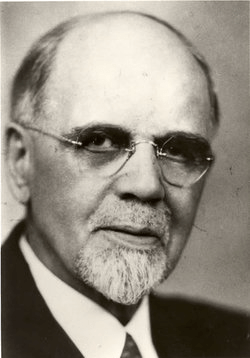
Credit: Angela Mattinson via Find-a-Grave
Here it is good to recall the experience and practice of Joseph Ramseyer (b 1869 near New Hamburg, Waterloo County, Ontario), one of the chief organizers of the Missionary Church Association (1898) in the United States.16 His spiritual lineage goes back some generations in the Amish community, but it was the assurance of salvation that Henry Egly of Berne, Indiana, experienced about 1850 that began a chain of witnesses God used. Egly preached the new birth vigorously, and Ramseyer’s family heard him in Waterloo County. Joseph was moved to faith, responding to his reading of the Bible while recovering from a farm accident. Joseph’s grandfather, an Amish bishop, was converted through the combination of his grandson’s changed life, and Egly’s preaching in Ontario. After some of the Ramseyers had moved from Ontario to Michigan about 1890, Joseph had a further three-day encounter with God on the farm near Elkton, Michigan. “The Holy Spirit came in to abide,” he wrote.17 It is said he never left his study in later life unless he renewed his willow grove experience of the Holy Spirit’s presence.18
Other views. As I hinted in EMCC History “Blessed Assurance Part 1”, some churches think they have a short cut to assurance: “God said it, I believe it. That’s all that I need to know.” That is, you don’t need an internal witness, no need to think through what God means when he speaks. No need for the Holy Spirit to witness with our spirit that we are children of God. This is not the same as a feeling, and it is not merely rational reflection (a perfectly proper activity all believers should practice).
Testimony. I don’t know why, I don’t know how, but I have never yet doubted I was a child of God since my submission to the gospel of Jesus. Discouragement, yes, times of anguish, certainly, off balance at times when I gave serious study to the beliefs of non-Christian religions, but never lost the certainty of having the right to become a child of God (John 1:12). It is all his mercy and grace. I remember a release of tension after weeks of thinking I should respond to the gospel invitation in the church services that summer, but I do not remember experiencing waves of joy as some do. Some preachers try to use a recollection of our first excitement at first believing to shame us to submit to a renewal or even repentance to regain our “first love” (Revelation 2:4), but I am mostly aware of growing in love for God and the Lord Jesus during my lifetime. I could be wrong.
Others have struggled. I don’t judge them. Pastors know people who slip into despondency for any number of reasons. While Mennonite theologian John Wenger did not comment on Wesley’s “Witness of the Spirit,” in his 1956 book, he was quite aware of the circumstances that rob Christians of peace and joy in Christ: “…ill health…emotional trauma,” including “the emotional instability of adolescence.”19 We also know we have an enemy, the evil one, who exploits our condition or doubts to destroy joy (Ephesians 6:10-18, I Peter 5:8). One response may be as in Revelation 12:11—we overcome the evil one by the blood (atoning death) of the Lamb and our testimony of his salvation. Later, Wenger did include in his chapter “An Attempt at a Synopsis: Anabaptist-Mennonite Tradition,” this statement: “Such converted people know by immediate awareness that God by His Spirit has sought them out and graciously brought them to new life in Christ.” This sounds very much like acknowledgment of the witness of the Spirit.20
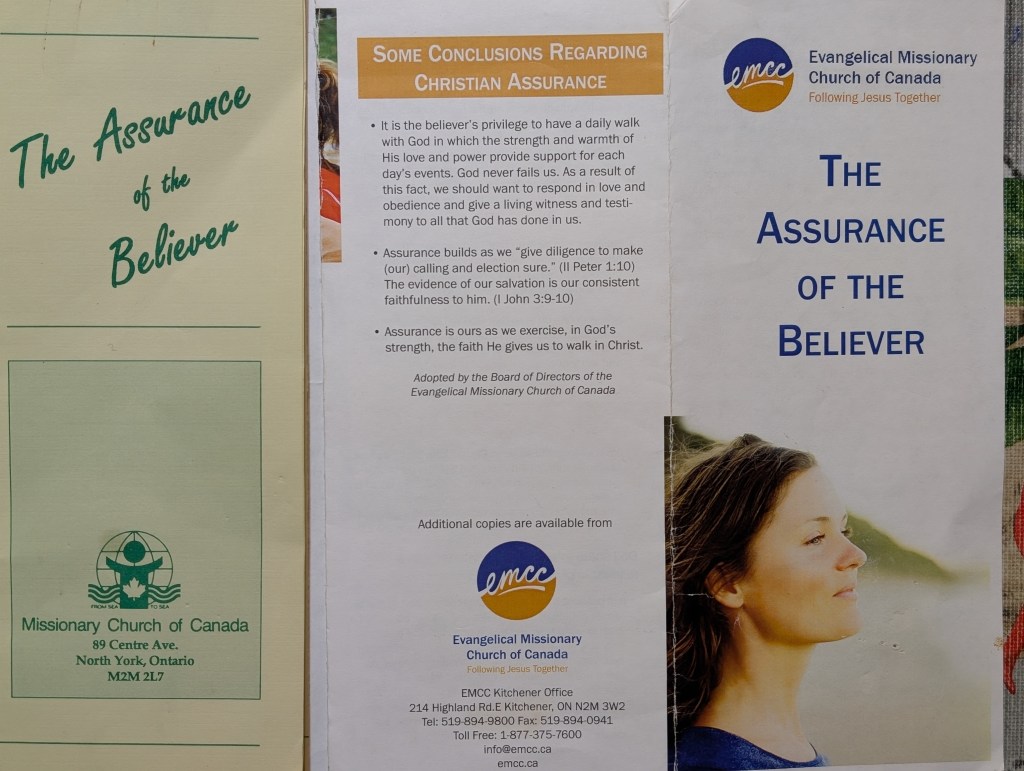
Courtesy: Missionary Church Historical Trust
A position paper. The Missionary Church Association produced out of their denomination’s struggles, a pamphlet on “The Assurance of the Believer” at some point. The United Missionary Church adopted the pamphlet in 1967 in addition to its Articles of Faith and Practice.21 It continued to be published through the various mergers and establishing of the two North America Missionary Churches in 1988.22 Besides Arminian arguments about the security of the believer (not “the elect”), and Wesley’s discussion on Romans 8:16 and I John 5:13 of the witness of the Spirit, the pamphlet quotes biblical passages of God’s encouraging promises to us. The national board of the Evangelical Missionary Church of Canada again approved this pamphlet, updated as recently as 2025.23 It is quite good. I commend it to you.
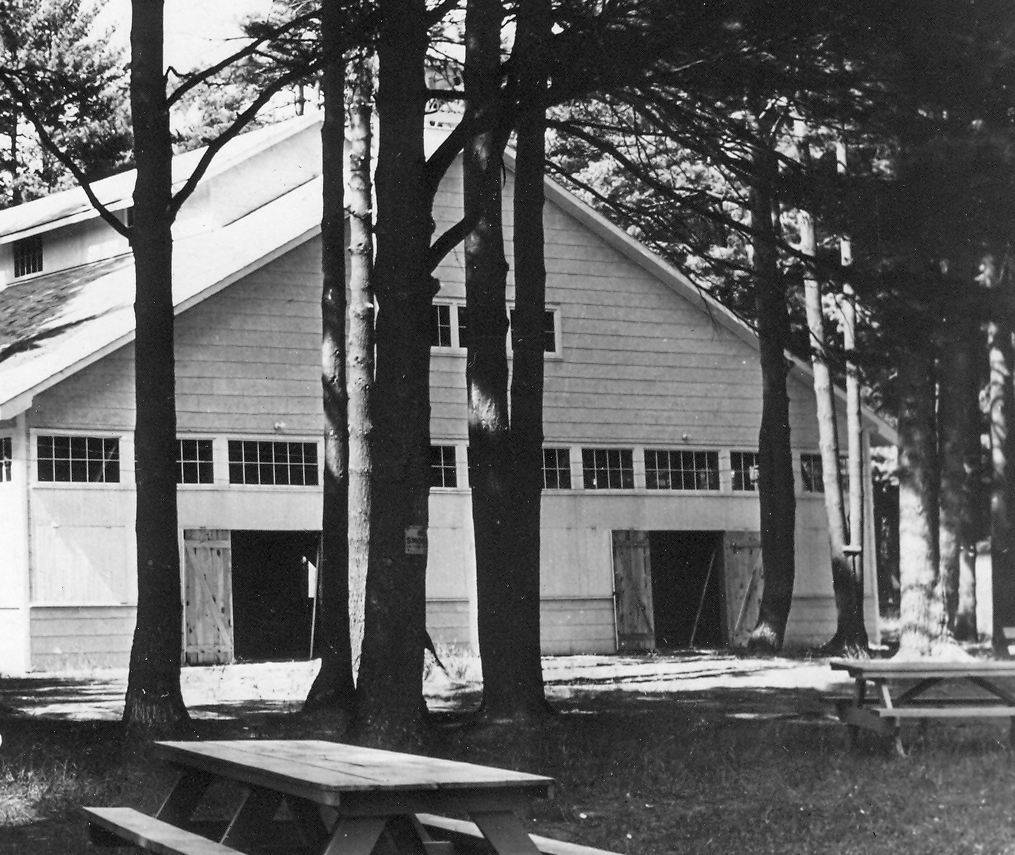
Banner: Entrances of Stayner Camp tabernacle ca 1947/1948, where assurance of faith has been proclaimed steadily. Courtesy: Missionary Church Historical Trust
1Ward M Shantz wrote “John Wesley’s Teaching on Christian Perfection,” for an MA for the Winona Lake School of Theology (1934), reprinted in Kenneth Geiger, ed, Insights into Holiness (Kansas City, MO: Beacon Hill Press, 1962) p 131-142.
2Charles S Gingerich, “Pietistic and Wesleyan Influences in the Mennonite Brethren in Christ Church,” Reflections 4:6 (Fall 1996) p 18-23; James Clare Fuller, Hidden in Plain Sight: Sam Goudie and the Ontario Mennonite Brethren in Christ (Eugene, OR/ Hamilton, ON: Wipf and Stock/ McMaster Divinity College Press, 2024) p 25-26.
3Wayne Gerber, “The Mennonite Brethren in Christ,” Reflections– “Founding Issues of the Missionary Church” 1:1 (Summer 1993) p 13.
4H Ray Dunning, Grace, Faith, and Holiness: A Wesleyan Systematic Theology (Kansas City, MO: Beacon Hill Press of Kansas City, 1988) p 445. Scriptures on peace include Isaiah 26:3, 32:17-18, Psalm 119:165; Amos Binney and Daniel Steele, Binney’s Theological Compend Improved (New York: Methodist Book Concern, 1878 and 1903) p 126.
5A reading course text H S Hallman promoted was Benjamin Field ed by John C Symons, The Student’s Manual of Christian Theology 2nd ed (London: Hodder and Stoughton, 1870, reprint New York: Methodist Book Concern).
6Jasper Abraham Huffman, ed, History of the Mennonite Brethren in Christ Church (New Carlisle, OH: Bethel Publishing, 1920) p 55.
7Samuel J Steiner (2010), “Hoch, Daniel (1805-1878),”
https://gameo.org/index.php?title=Hoch,_Daniel_(1805-1878)
8Clare Fuller (2014), “Raymer, Abraham (1814-1891),”https://gameo.org/index.php?title=Raymer,_Abraham_(1814-1891)
9Clare Fuller (2014), “Schlichter, Samuel (1821-1873),”
https://gameo.org/index.php?title=Schlichter,_Samuel_(1821-1873)
10John Webster Grant, A Profusion of Spires: Religion in Nineteenth-Century Ontario (Toronto: University of Toronto Press, 1988) p 61.
11John Webster Grant, ed, Salvation! O The Joyful Sound: The Selected Writings of John Carroll (Toronto: University of Toronto Press, 1967) p 146-147.
12https://www.ubcanada.org/ub-church-history/
13J Henry Getz, ed, A Century in Canada: (Kitchener, ON: Canada Conference, Evangelical United Brethren, 1964) p 11.
14Samuel P Spreng, What Evangelicals Believe (Harrisburg, PA: Evangelical Publishing House, 1929) p 111-113.
15The Discipline of the Evangelical United Brethren Church (Dayton, OH/ Harrisburg, PA: Otterbein Press/ Evangelical Press, 1955) p 27-28.
16Walter H Lugibhil and Jared F Gerig, The Missionary Church Association: Historical Account of Its Origin and Development (Berne, IN: Economy Printing Concern, 1950) p 22-27, 51-53.
17This is a summary of Eileen Lageer, Merging Streams: Story of the Missionary Church (Elkhart, IN: 1979) p 10-12.
18Timothy Paul Erdel, “From Ada to Zenas: Memorable Missionary Church Leaders,” Reflections, forthcoming.
19John C Wenger, Introduction to Theology 2nd ed (Scottdale, PA: Herald Press, 1956) p 302. I also have a 1975 revision/reprint.
20John C Wenger, God’s Word Written: Essays on the Nature of Biblical Revelation, Inspiration, and Authority (Scottdale, PA/ Kitchener, ON: Herald Press, 1966) p 139.
21Eileen Lageer, Merging Streams: Story of the Missionary Church (Elkhart, IN: Bethel Publishing, 1979) p 313.
22The Assurance of the Believer, published steadily in different styles since then.

 EMCC History
Leave a comment