Fanny Crosby wrote the gospel song that began, “Blessed assurance, Jesus is mine…”1 Although she attended many churches in her lifetime, Frances Crosby van Alstyne was usually a member of Methodist congregations. The gospel song was written to a melody by Pheobe Palmer Knapp while Fanny was visiting that well-known New York Methodist.2

gospel and patriotic songs.
Credit: Project Gutenberg, Public domain.
Christians have sought for personal assurance of eternal life ever since the hope of salvation from sin, death and hell has been proclaimed (cf Acts 8:24). John Wesley made “assurance” a widely sought experience as a result of his teaching.3 He learned of it from the Moravian Christians he encountered first on the ship he took to the colony of Georgia in North America. At the start he did not believe it—that anyone could be certain of their acceptance with God. Eighteenth-century Anglicanism was fairly hostile to the notion.4 In England in Wesley’s day, the claim was named enthusiasm, fanaticism, because one thereby claimed a special revelation.
Pop theology. In the West in these days, people assume that if there is an afterlife it will be pleasant for most of us. If God is involved in their thinking, they think he is benevolent and will not deny blessedness to any except the worst, a Hitler or Mussolini, a Stalin, serial killers or pedophiles. Of course he accepts us.
On the other hand, though I don’t hear it so often perhaps, there are Christians, or would-be Christians who say they hope they are saved, as Wesley answered the Moravian leader August Gottlieb Spangenberg, or they hope they will “go to heaven.” I heard many sermons by my pastor Earl Pannabecker when I was a new believer which tried to correct this “hope so” belief into a “know so” faith. It was said to be the believers’ privilege to know they are saved, contrary to the “other” churches (especially Roman Catholics). The sermons were usually based on verses in I John such as 3:14, 24, 4:13-16, or 5:13, “…that you may know that you have eternal life.”

Credit: Wikimedia Commons. Public domain.
Photo by Sreeram S Nair, 2008, mountains in Sikkim.
One of my children pointed out to me that the whole medieval Catholic system of grace dispensed by the sacraments of the Church was designed to provide hope of salvation to the penitent faithful obedient person.5 If that didn’t work there was Purgatory. Luther was an extreme, but also typical example of someone who had doubts about the system: he asked, had he repented or confessed enough? Had he taken holy communion with a proper reverence fitting for a holy God? When the Reformation came along proclaiming salvation by faith alone, the hope of certain salvation shifted. Now people worried about whether they had saving faith, something more subjective, or were among the elect, something God knew, and didn’t have to tell us; he can be inscrutable after all.
Not too long ago, when a doctrine of a Judgement Day was more commonly taught, Christians might normally have said that nobody, except perhaps saints (thinking of a Catholic category), can be sure of “going to heaven.” In much of Europe, it was taught that to claim to know one was saved and accepted by God was presumption (claiming more than God had allowed). The Council of Trent, in fact, declared anathema (a curse) on anyone who did.6
Biblical assurance is unfortunately tied up with our understandings of God’s sovereignty, love and will, and human will. It therefore involved God’s knowledge, including foreknowledge and predestination. These are all problematic or at least contested notions and I would like to avoid diverting to discuss them in these posts, but some discussion is necessary.7 These debates have been going on since the Reformation and before, and I will certainly not settle it here!
(Muslims, who share an almost identical view of God’s sovereignty as many Reformed Christians, also have a problem with whether God will accept them into Paradise at the Judgement Day.8 Some Sufi sheikhs claim that God has promised them that those they intercede for will make it,9 but otherwise Muslims just have to live with probability that if they submit to God’s instructions they will be received into bliss.)
1. In Calvinism, descended to some extent from Augustine of Hippo’s doctrine,10 the elect are certain of attaining ultimate salvation, because God decreed it will happen. Christ died precisely for those God foreordained and no others, and God will not fail in achieving his plan; the saved will persevere.11
This doctrinal schema was a great comfort to those who for some reason believed they were among the elect. The Reformed and Lutherans initially connected assurance of persevering with their faith (not sacraments). They knew it could not be simply believing the right doctrines, but should be about trusting the Saviour only. But introspection could lead to doubts about faith alone. Maybe I am secretly clinging to something else as well? For those who did not have the confidence, the fear of not being counted among the elect led some to despair. The English Puritans, staunch Calvinists, for example, “struggled with the problem of assurance of elect status.”12 Perhaps they had plenty of regrets about their circumstances or way of life, or they knew their past sins were great.13 Or they saw themselves in Romans 7:14-24 fashion as wretched non-doers of what God wants. In any case they did not know for certain they were elect.
Calvinists have been quite aware of the pastoral problem when people believe they are not among the elect and become quite despondent. I think every pastor in every tradition has met people like this since the days of the early Church. The Reformed, as others, have provided rational criteria to demonstrate to followers of Jesus that they are saved.14 Did you repent of your sins? Did you have faith to appeal to Jesus to save you? Did you believe only he saves sinners? Then you are saved. Bill Bright’s “Four Spiritual Laws” is partly descended from this line of thought. It only acknowledges the problem of feelings (“it follows faith”). “Just believe,” is the advice. If there are still doubts you could ask yourself, do you love God? His people? Do you love the Bible? Do you have any amount of loving your neighbour as you love yourself? Then you have evidence you are saved, since you are growing in sanctification. These arguments are rational and certainly should encourage those who wonder about their status. In practice, however, this is still a probability argument. Probably you are saved. Almost certainly, you are elect. Almost certainly, you will persevere to the judgement.
2. Methodism. John Wesley did not believe in unconditional election.15 He knew these rational witnesses to saving faith and he acknowledged they were important. However, he thought there was something else, something more sure. He preached three sermons, collected in his Standard Sermons, based on Romans 8:16 which explain his understanding of the teaching.16
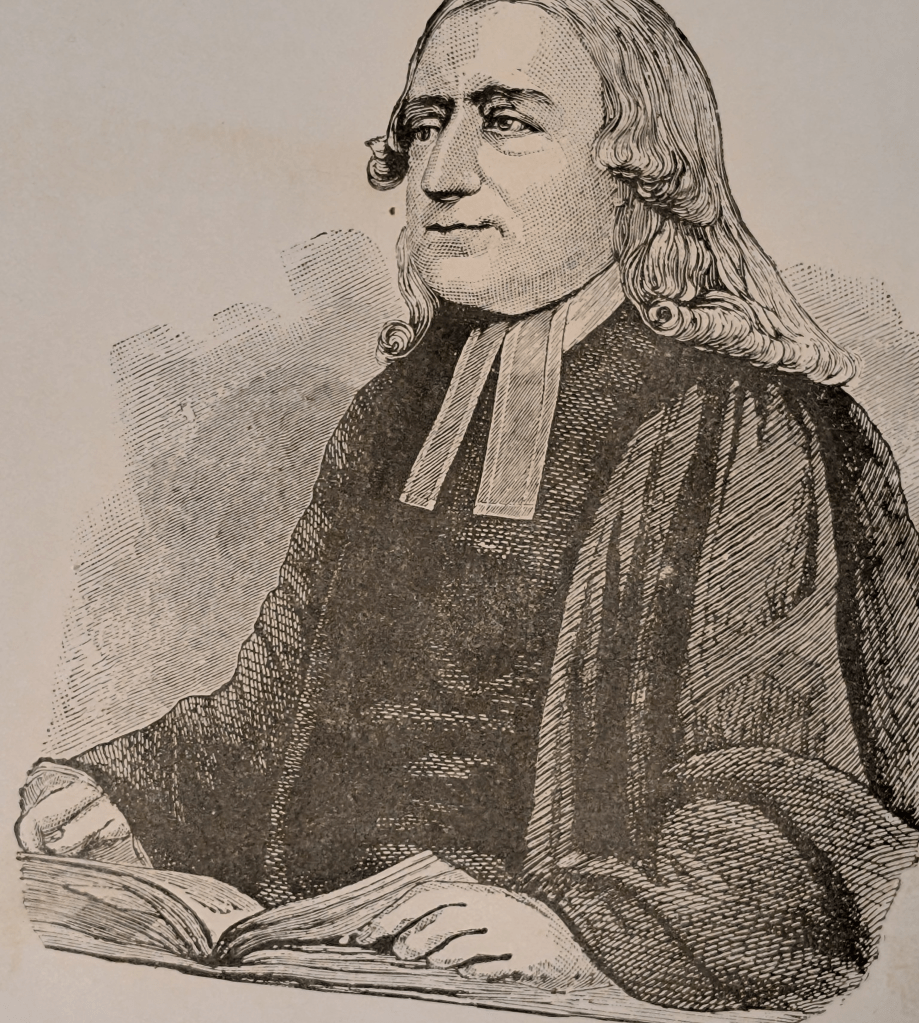
Wesley also distinguished two types of assurance:17 The assurance of salvation, which was generally what Calvinists proclaim, that an elect person can be certain of ultimate salvation through the Judgement Day into the new heaven and new earth. This sort of assurance was not a great concern of Wesley.18 He preferred the assurance of faith, that is, that the believer may be certain of “present salvation,” current acceptance by God. This led to Methodism’s emphasis on abiding in Christ daily, constantly, now. This certainty was received by a direct impression (his phrase) from the Holy Spirit to our spirit. He explained it as being a belief, unmediated, as a joy or a pain are definite sensations. You know it; you don’t have to reason to prove it.
Wesley did not claim to be able to explain how the Spirit does this. Romans 8:16 taught him to confidently affirm the Spirit does witness this way and the believer may ask for the assurance from God. Mennonite Brethren in Christ services regularly encouraged people to seek for assurance and to testify to it. Sam Goudie affirmed this possibility in the catechism he edited. “Is this work of the Holy Spirit accompanied by any special witness to us[?] [Answer:] Yes, the Holy Spirit witnesses to us that we have become the children of God. Rom 8:16, I Cor 2:12, Acts 15:8, I John 3:24.” 19
When Wesley first came to his conclusion, he thought every believer ought to expect this witness, but as he grew older he said while it was a privilege for every believer to experience this witness, this assurance, some believers might have confusion or something preventing them from being conscious of the witness. Wesley at first thought the day God warmed his heart, when he really knew he was loved by God, that salvation was for him, was the day of his salvation, but later he understood it as more an experience of assurance.20
Methodism, shaped by John Wesley’s preaching and his brother Charles’ hymns, encouraged everyone to repent and believe the gospel, but also to ask God for the witness of the Spirit.21 Preachers were expected normally to have “prayed through” to this assurance, and if they didn’t, to be actively seeking it. In fact there are a multitude of testimonies from numerous Christian traditions detailing the joy experienced when the person believed God’s promises of salvation. This joy is a clue that our spirit has truly encountered Jesus for salvation. Think of the Ethiopian eunuch on his way rejoicing (Acts 8:39). The early church assumed it, connecting it with receiving the Holy Spirit.22 The Spirit is the one who effects our adoption and moves us to cry, “Abba, Father!” (Galatians 4:5-6), a conscious experience.
The early EMCC preachers knew there would be times when a believer does not feel saved. In fact numbers of them experienced it themselves. They scheduled services to encourage people to pray for restoration (if there has been sin), or awareness of the witness to be restored. Next they would recommend one to pray for the second blessing, the cleansing of the heart. But that is a discussion for another time.
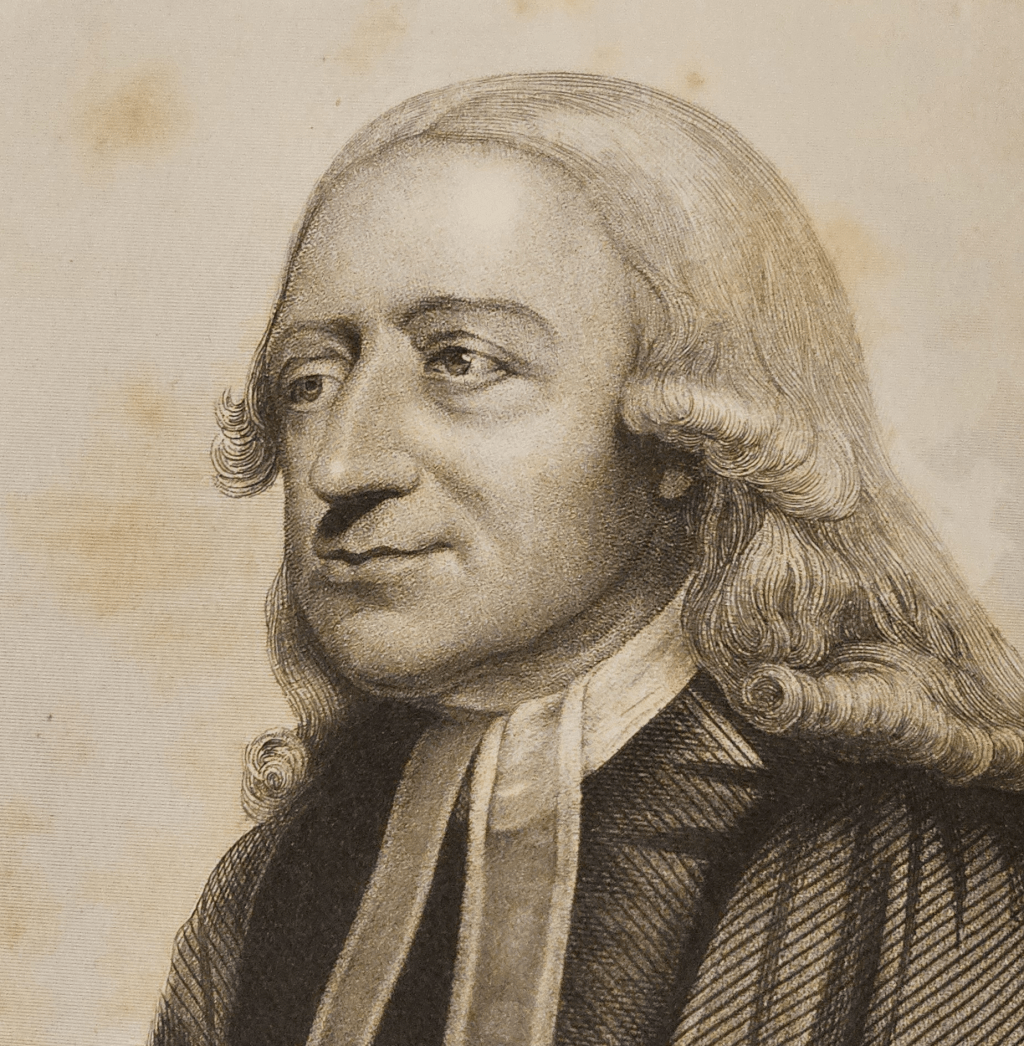
Banner: John Wesley portrait in P Douglass Gorrie, Lives of Eminent Methodist Ministers (1856).
1https://en.wikipedia.org/wiki/Blessed_Assurance
2Ian C Bradley, The Book of Hymns (New York: Overlook Press, 1989) p 65-66.
3The Global Anabaptist Mennonite Encyclopedia (GAMEO) has an article on neither Assurance nor Witness of the Spirit.
4H Ray Dunning, Faith, Grace and Holiness: A Wesleyan Systematic Theology (Kansas City, MO: Beacon Hill Press of Kansas City, 1988) p 442.
5Robert W A Letham, “Assurance,” in Sinclair B Ferguson, Christopher F Wright and James I Packer, ed, New Dictionary of Theology (Downers Grove, IL: InterVarsity Press, 1988) p 51-52. This article ignores Wesley.
6Council of Trent, Sixth Session, Canon 15 and 16; “15. If any one saith, that a man, who is born again and justified, is bound of faith to believe that he is assuredly in the number of the predestinate; let him be anathema.
16. If any one saith, that he will for certain, of an absolute and infallible certainty, have that great gift of perseverance unto the end,-unless he have learned this by special revelation; let him be anathema.” https://en.wikipedia.org/wiki/List_of_excommunicable_offences_from_the_Council_of_Trent
7John Wesley realized these issues were all interrelated and dealt with them so in his third treatment of perseverance, Predestination Calmly Considered (1752); Allen Coppedge, John Wesley in Theological Debate (Wilmore KT: Wesley Heritage Press, 1987) p 125.
8Rabi’a of Basra’s (d ca AD 801) questions to a potential suitor represent the orthodox view; John Alden Williams, ed, Islam (New York: Washington Square Press, 1963) p 128.
9Based on Qur’an, Sura 10, ayah (verse) 3 “There is no intercessor [with God] unless He gives permission.” Sufi founders often claimed God had given them that permission.
10For example, John Calvin, Institutes of the Christian Religion, Book 3, chapter 22, section 8.
11Calvin, Book 2, chapter 3, sections 10 and 11. Calvin, in common with many Reformation writers, is intemperate in his condemnation of those with whom he disputes. Readers in the 21st century just have to get over the condemnatory rhetoric.
12Stanley J Grenz, Renewing the Center: Evangelical Theology in a Post-Theological Era (Grand Rapids, MI: Baker Academie, 2000) p 38.
13Note the analysis in William J Abraham, “Predestination and Perseverance,” in Clark H Pinnock, ed, The Grace of God, the Will of Man: A Case for Arminianism (Grand Rapids, MI: Zondervan, 1989) p 235.
14This is the approach of such a fine Mennonite theologian as Wenger; John Christian Wenger, Introduction to Theology 2nd ed with revisions (Scottdale, PA: Herald Press, 1975) p 303-305.
15Coppedge, p 140.
16Nathaniel Burwash, ed, Wesley’s Doctrinal Standards: The Sermons Vol 1 (Toronto: William Briggs, 1881) p 90-116.
17Dunning, p 446.
18Abraham, p 232.
19Sam Goudie, ed, Book of Religious Instruction (Kitchener, ON: Executive Committee of the MBiC General Conference, 1932) Lesson 19, question 7, p 64.
20John B Job, “What Warmed John Wesley’s Heart?” [lecture at Ibadan] (Ibadan, Nigeria: Daystar Press, 1971).
21Many Methodist theologies I have consulted prefer to talk of the “witness of the Spirit,” rather than “assurance.” This is reflected in Wilber T Dayton, “Witness of the Spirit,” in Richard S Taylor, ed, Beacon Dictionary of Theology (Kansas City, MO: Beacon Hill Press of Kansas City, 1983) p 548. Dayton barely glances at any other source or tradition of assurance.
22Thomas C Oden, John Wesley’s Scriptural Christianity: A Plain Exposition of his Teaching on Christian Doctrine (Grand Rapids, MI: Zondervan Publishing House, 1994) p 234.


 EMCC History
Leave a comment