
Denominations have fallen on hard days in North America though they are flourishing in much of the rest of the world. In the last Canadian census, 2 million Christian respondents declined to name a denomination as their religious identity, a large increase from 2011. In contrast, I seem to have enjoyed the best that a disciplined biblical religious community can provide. I can’t look at denominationalism more here, except to question the dismissal of them, as I suggested in the last paragraphs of my first EMCC History blog.
So there are good things that a connectional Christian Church can provide, that congregationalist or baptistic forms do not. Although none of the attempts after 1883 mentioned in these two blogs resulted in mergers of the Mennonite Brethren in Christ and other denominations until 1969, that didn’t stop explorations and discussions.
Holiness groups and Mennonites
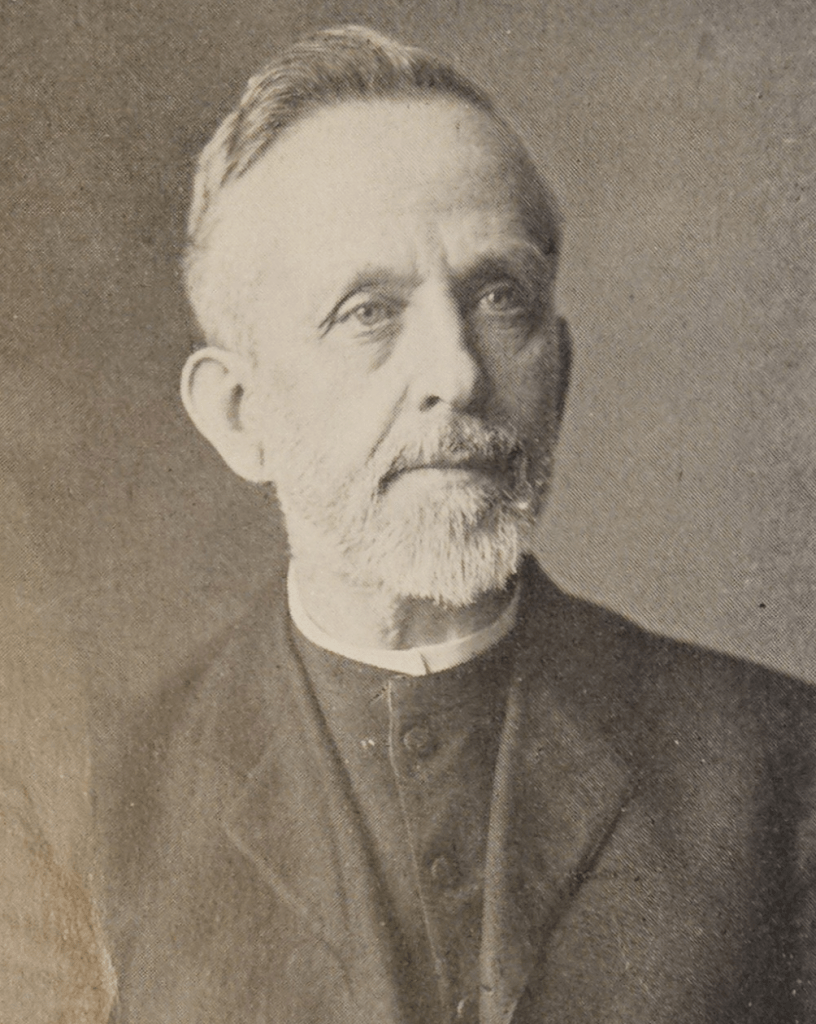
brought an invitation to closer ties to the Ontario MBiC.
Credit: A Sims, Grace and Glory (Toronto, nd) opp p 1.
4th merger attempt. More exploration of cooperation with a view to merger by some came in the early decades of the 20th century. Albert Sims, a Free Methodist publisher and evangelist1 brought greetings and a resolution from his Ontario FM Conference in 1910 desiring closer unity with the MBiC Ontario Conference.2 The invitation was warmly received, and fraternal delegates exchanged, but issues with Free Methodism could have prevented further movement, including, I suppose, the FMC acceptance of infant baptism and no clear stand on non-resistance. Size sometimes matters: when a clearly smaller body merges, it tends to be swallowed by the bigger church. If two groups are somewhat similar in size they may negotiate longer to retain as many distinctives as they can. By 1910, the FMC was larger than the MBiC in North America, but in Ontario, the two districts’ memberships were about equal. When the FMC in Ontario started a school in Port Credit in 19243 and they invited the Ontario Conference to support it, and serious consideration was given to cooperate in the school. In the end, the MBiC set up Emmanuel Bible School in 1940 instead. Some MBiC youth did attend the Port Credit school, Lorne Park College, nevertheless.4
5. After the first World War and after Daniel Brenneman’s death (1919), visitors Joseph K Gerig and Emanuel Slagle to the 1920 MBiC General Conference, spoke to the Conference. These were representatives of the Defenseless Mennonite Church,5 “assuring the Conference, that their branch of the Church is anxious for a closer fellowship and cooperation.”6 The DMC had Amish origins in the 1860s, and were known as the Egli Amish before they chose the name DMC only in 1908. They evidently spoke not just for their church, for later in the Conference, after a further address, the Conference passed a resolution to appoint five members to meet with representatives of other churches “relative to union.”7 The committee was approved, and Sam Goudie (Ontario), Nicholas W Rich (Nebraska), Benjamin A Sherk (Michigan), Jasper A Huffman (Indiana and Ohio) and Abraham B Yoder (Indiana and Ohio) were elected. Attempts by the Defenseless Mennonites to interest the MBiC in merger continued at the next General Conference.8
6. The Committee on Church Union reported to the 1924 General Conference that they met with representatives of the Defenseless Mennonites and the “Mission” (apparently meaning the Missionary Church Association) in January 1921, but with no powers to act, all they could do was discuss. In fact they also met with the Central Conference of Mennonites, a small Amish-based group from Illinois which later joined the General Conference Mennonites.9 The MCA was an offshoot of the Defenseless Mennonites, so perhaps this tension discouraged further action. In 1923, the MCA had a schism involving the Calvinist-Arminian question,10 and perhaps felt unable to consider further merger talks at that time. Because the MCA did finally merge with the United Missionary Church in 1969 and the story is written down in our history books, we will leave that story for now.11
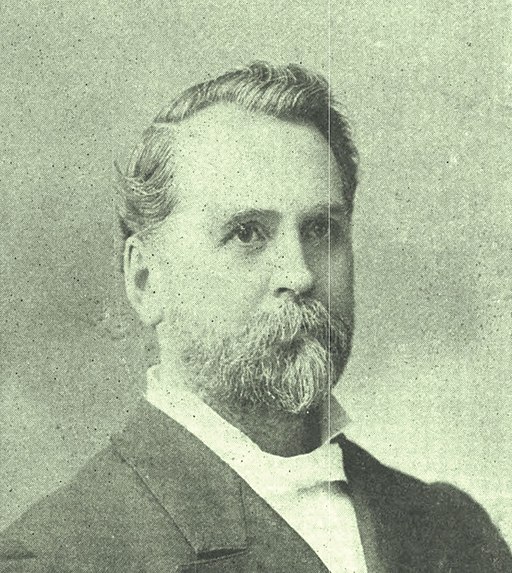
and Pilgrim Holiness Church leader
Credit: S C Rees, Miracles in the Slums (Chicago, 1905), Wikimedia Commons, public domain.
7. The committee also met in 1923 with people from the Pilgrim Holiness Church which had formed on a merger of three holiness groups in 1922,12 and The Wesleyan Methodist Church [of America].13 These were holiness churches in the Wesleyan tradition. I learned about the Pilgrim Holiness Church through the biography of one of its key leaders, Quaker-holiness evangelist Seth Cook Rees (1854-1933). Rees’ preaching and camp meeting career illustrates very well why his church might have been a good merger partner. Rees’ peace witness showed up during World War I in a statement from his newly founded First Pentecostal Pilgrim Church in Pasadena, California, in 1918, but how it fared later in the 1922 PHC merger, I don’t know.14 The Wesleyan Methodist Church (not to be confused with the [British] Wesleyan Methodist Church) began in 1841 as an anti-slavery pacifist denomination protesting compromise in the Methodist Episcopal Church, but the American Civil War tempted the WMC into becoming patriots for the northern cause.15 (The Pilgrim Holiness people merged with the Wesleyan Methodist Church ie “of America,” to form the Wesleyan Church in 1968.)
By the 1928 MBiC General Conference, interest in union on all sides seems to have dried up, as the Committee on Church Union had nothing to report over the previous four years.16
8. After the withdrawal of the Pennsylvania Conference from the MBiC (announced in 1947, formalized in 1952), the MBiC possibly felt free to open merger talks with fully Wesleyan churches again such as the Evangelical Methodist Church, which had formed only in 1946, again out of the Methodist Episcopal Church.17 Kenneth Geiger, UMC General Superintendent and later Missionary Church President, seems to have initiated this effort.18 The General Board of the United Missionary Church (as the MBiC became in 1947) prepared to recommend merger in 1964.19 Complete reports on exploratory meetings were presented at the March 1965 General Conference of the UMC.20 This merger didn’t happen either, derailed by the renewed hopes of a UMC merger with the Missionary Church Association21 when the MCA concluded they could not merge with the Christian and Missionary Alliance!22
9. In the 1960s, the Ontario District of the United Missionary Church explored merger with the Eastern Canada district of the Christian and Missionary Alliance. Quite a bit of interest was stirred up for a while. W M Shantz seems to have favoured this move.23 The plan was given up when the C&MA, a binational denomination as was the UMC, asserted that their districts could not legally merge with another denomination. I have often wondered if our records correctly reflected the intention of the two districts, because it is fairly obvious to me that components of denominations cannot just up and merge like that.
Banner: Red “X.” Credit: internet image, public domain.
1We met Albert Sims before in the EMCC History “Non-conformity to the World” blogs. See also John Wilkins Sigsworth, The Battle was the Lord’s: A History of the Free Methodist Church in Canada (Oshawa, ON: Sage Publishers,1960) p 5, 23-27, 41, 47-58, etc.
2Ontario Conference Journal 1910, p 22-23, 32.
4James Clare Fuller, Hidden in Plain Sight: Sam Goudie and the Ontario Mennonite Brethren in Christ (Eugene, OR: Wipf and Stock/ McMaster Divinity College Press, 2024) p 262 for more details of fraternal delegates between the Free Methodists and the MBiC in Ontario.
5Stan Nussbaum, You Must be Born Again: A History of the Evangelical Mennonite Church (Fort Wayne, IN: Evangelical Mennonite Church, 1979). Also: https://fecministries.org/about/history/
610th General Conference Journal 1920, p 23. The DMC is now known as the Fellowship of Evangelical Churches based in Fort Wayne, IN.
710th General Conference Journal 1920, p 26, 27, 28.
811th General Conference Journal 1924, p 25.
9“Minutes of a Meeting to Consider Church Union, January 6, 1921,” in Missionary Church Archives, Mishawaka, IN. These minutes were brought to my attention by Timothy Paul Erdel in 2002.
10Engbrecht and Timothy Paul Erdel, Crisis… [I have a copy somewhere in my files–I’ll add it when I find it!]
11Eg Eileen Lageer, Merging Streams: Story of the Missionary Church (Elkhart, IN: Bethel Publishing, 1979) p 305-337. Also Tillman Habegger, “History of Merger Negotiations,” Reflections (Summer 1993) Vol 1 no 1, p 4-8.
12Paul S Rees, Seth Cook Rees: The Warrior-Saint (Indianapolis, IN: Pilgrim Book Room, 1934). My copy was once owned by my deacon at Evangel Missionary Church, Kitchener, Gord Stauffer. Rees’ son Paul Rees became an even more famous evangelical preacher.
13https://en.wikipedia.org/wiki/Wesleyan_Methodist_Church_(United_States)
14http://www.pentecostalpacifism.com/home/services/holiness-pacifist-groups/pilgrim-holiness/
15Daniel R Chamberlain, “First Pure, Then Peaceable: The Position of the Wesleyan Methodist Church on War and Peace from its Founding to the Civil War,” in Terry L Brensinger and E Morris Sider, ed, Within the Perfection of Christ: Essays on Peace and the Nature of the Church (Nappanee, IN: Evangel Press, 1990) p 217-230.
1612th General Conference Journal 1928, p 42.
17https://en.wikipedia.org/wiki/Evangelical_Methodist_Church
18eg Ontario Conference Journal 1964, p 37.
19[Everek R Storms], “General Board to Recommend Merger,” Gospel Banner (November 5 1964) 12.
20Proceedings of the 20th General Conference UMC 1965, p 20, 56-63, and 73.
21Eileen Lageer, Merging Streams: Story of the Missionary Church (Elkhart, IN: Bethel Publishing, 1979) p 314.
22Proceedings of the 20th General Conference UMC 1965, p 59.
23Ontario Conference Journal 1965, p 40; Ontario Conference Journal 1966, p 20, 23, 33, 40.

 EMCC History
Leave a comment