Many years ago I overheard a man say that he wouldn’t stay in a church that didn’t believe in divine healing. I was a young Christian in the United Missionary Church, as it was called then, and I had never heard of “divine healing,” much less as a test of a Good Church. I was happy however, knowing that our pastor did keep a bottle of oil handy and our congregation actually did pray and anoint people for healing. I’m not sure if I heard a sermon or Sunday school lesson about it, but I had heard James 5:13-16 read out in church to back up the practice. We had testimonies in church of people who recovered from illness in answer to prayer, and no surprise, many requests for healing from sicknesses. I did not know at first that it was taught in the Articles of Faith of the UMC.1
Maybe some churches don’t, but every congregation I have been part of in nearly 60 years since, has featured prayer for the sick. I have never lost the conviction that God can and wants to heal, and actually does it, sometimes in answer to prayer, maybe with oil, or with laying on of hands, by medicine (human means) or without medicine. Every statement about the so-called “faith cure” has been contested or qualified. The non-Christian world has a wild range of ideas about health and healing. We’ll get to some of that in later blogs, but I am going to follow the track to what the Missionary Church/ EMCC has taught and testified.
Health and healing are obviously topics of great and perennial human interest in all societies. We all have suffered from sickness and we all want health! The literature and practices are vast, including Christian writings in the last century and a half. Everybody has an opinion. Western medicine costs trillions of dollars in research and delivery. Many who benefit from “western” or “scientific” medicine also distrust it. People spend billions on “alternative medicines.” Quacks abound, medical and religious. People still die of diseases every day. Good doctors try their best.
Our church library in North Bay in the 1960s contained a popular book by Dr S I McMillen, called None of These Diseases. Does anyone remember it? In my memory, the book taught that OT laws distinguishing clean and unclean were actually dietary and hygiene laws and suggested that modern medicine was finally catching up with God’s revelation from thousands of years ago. McMillen’s book is just one in a long discussion in Christian circles covering many questions about healing. The book has now sold over a million copies and is available in an edition revised by his grandson, also a medical doctor. Dr Sim Isocrates McMillen (1898-1990) and his wife Alice were American Wesleyan Methodist missionaries in Sierra Leone.2
In addition to the tradition of western scientific medicine, four aspects of healing seem recognized in Christian encyclopedic works: 1) healing in answer to prayer, with or without anointing with oil, 2) believers’ spiritual gifts of healing,3 3) the question whether healing is promised by God through the atonement by Jesus4 and 4) historical healing movements and ministries.5 A 5th aspect, recognized at least in Africa: healing as power over spiritual attacks, including curses and diseases, should be added. Nigerian theologian Je’adayibe D Gwamna said that at the time his father became a Christian, his father’s thighs became swollen, which many believed was caused by the gods of his people, the Gbagyi. The swelling went away after a while and convinced many people that Christ and the gospel had protected him and healed him.6 United Missionary Church of Africa missionaries to the Gbagyi, Yohanna and Hannah Bulus, had a similar experience. They adopted a baby whose mother had died in childbirth. Her death proved to traditional worshipers that the baby was a dangerous “spirit child,” not really human. When Yohanna and his wife did not die by the malice of the spirit child, this demonstrated to some that Jesus was more powerful than the spirits and they began to follow Jesus. The child grew up well. My wife Halima and I have heard other such stories in Nigeria.
Bodily and Spiritual health. In numerous societies, healing and spiritual health are assumed to be related or even one and the same. The book of Psalms (eg Psalm 32) certainly connects God’s work, sin and health frequently, as did Jesus’ ministry. On the other hand, Jesus did not always identify sin or demons behind sickness, nor did he demand repentance from people who were demonized, which is quite the opposite of several popular teachings about driving out demons in charismatic circles. I do not mean that all the ideas of traditional societies are correct or biblical, just that they connect spiritual powers or amoral imbalances and sickness, perhaps, and the Christian disciple needs to know what to think about it.7
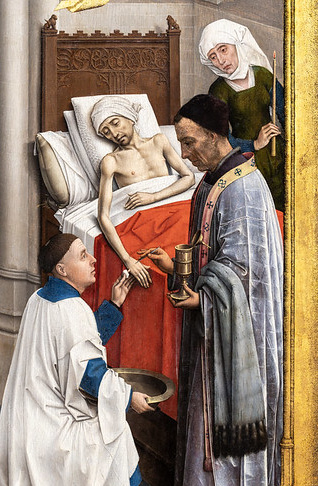
I think the hope that God heals in answer to Christian prayer has never been lost in any part of the Christian Church, given what the Bible relates about God and its stories of him healing people from the serious diseases in Egypt in Genesis 12:17 to the healing of the nations in Revelation 22:2. The Roman Catholic Church developed a ceremony from the NT and for a long time applied it to people on their death bed as a “sacrament” to prepare them for the world to come. It was called “extreme unction” in English, “unction” just being an anglicized Latin word for anointing with oil. “Chrism” is derived from Greek, meaning pretty well much the same.8 After the Vatican Council of 1963-1965, the RC shifted the use of unction to anybody who was sick, a more biblical practice. So praying for sick people was not new.
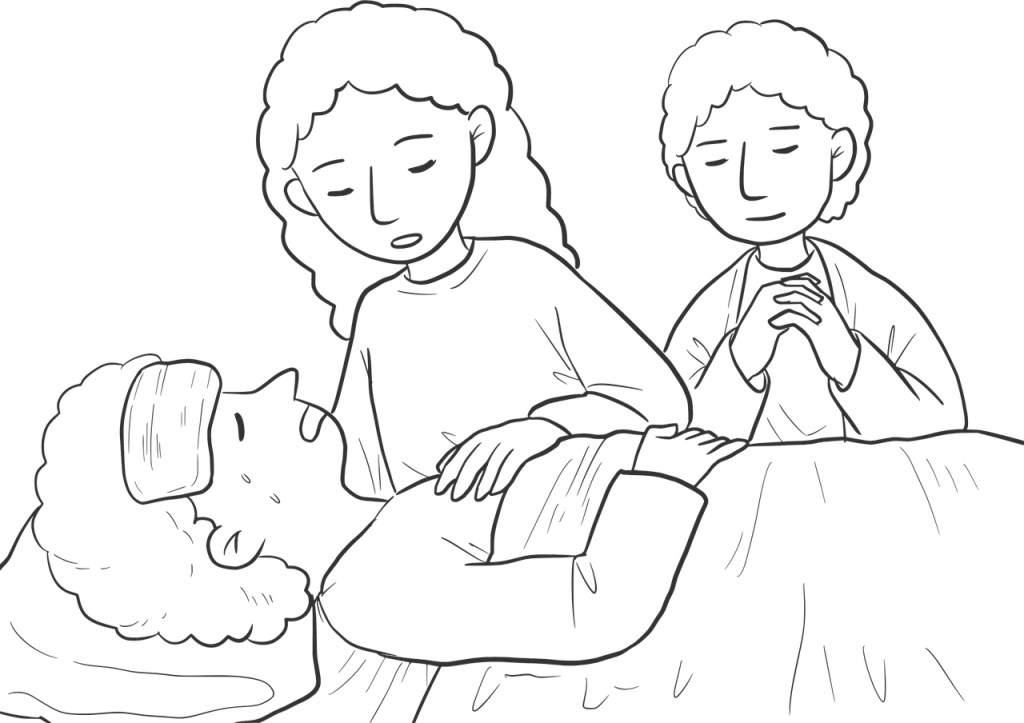
Protestants generally shunned the Catholic way as magical, or associated with non-evangelical teaching that unction conferred “grace.” In reaction, most Protestants stopped praying with anointing for healing entirely. The Church of England dropped instruction for use of oil in 1552.9 Praying for healing never stopped, eg the Church of England’s Book of Common Prayer (editions from 1549 to 1662) had an “Order for the Visitation of the Sick,” with many wise words and prayers. It was based on a very similar service of prayers for the sick used by Lutherans. Both are revisions of Latin service books. I am looking at my Church of England copy as revised for Canada in 1918, and an old Common Service Book of the Lutheran Church.10 Both are basically translations from German Lutheran service books from the 1530s. So on the surface, these big national churches continued to pray for the sick.
Mennonite response to biblical healing. When some North American Mennonites tasted the Methodist revivals of the mid-19th century, they got caught up in the excitement of an optimistic, almost belligerent movement pushing its Methodist mother in various directions, just when that mother was becoming successful, urban, and mainstream in the USA and Canada. I won’t go into the tensions that Wesleyan holiness created for the Canadian Methodists or the Episcopal Methodists in the USA.
With their biblicism, however, Mennonites could read instructions in James’ letter (5:13-16) for elders when called to anoint sick people with oil, and they could do it,11 though the evidence of the practice before the 19th century is weak.12 Many Mennonite groups, but not all, began anointing the sick for healing in the 19th century.13 The leaders of the revivalistic Mennonites of the 1870s were open to “radical” Christian practices, including prayer for healing with anointing oil. My next blog will document that adoption in the early EMCC.
Something new. What also developed in the later 19th century, was increasing speculation that God was going to restore to a purified, baptized-with-the-Spirit Church all the spiritual gifts of the New Testament, including the charisma of healing.14 This speculation was not confined to Methodists and I won’t go into that either. John Salmon, the pastor of the first Christian and Missionary Alliance-related congregation in Toronto, wrote into the constitution of his Bethany Chapel in 1891, the expectation that spiritual gifts would be restored when the church was spiritually ready.15
This hope spread to the Mennonite Brethren in Christ Church and produced unexpected results.
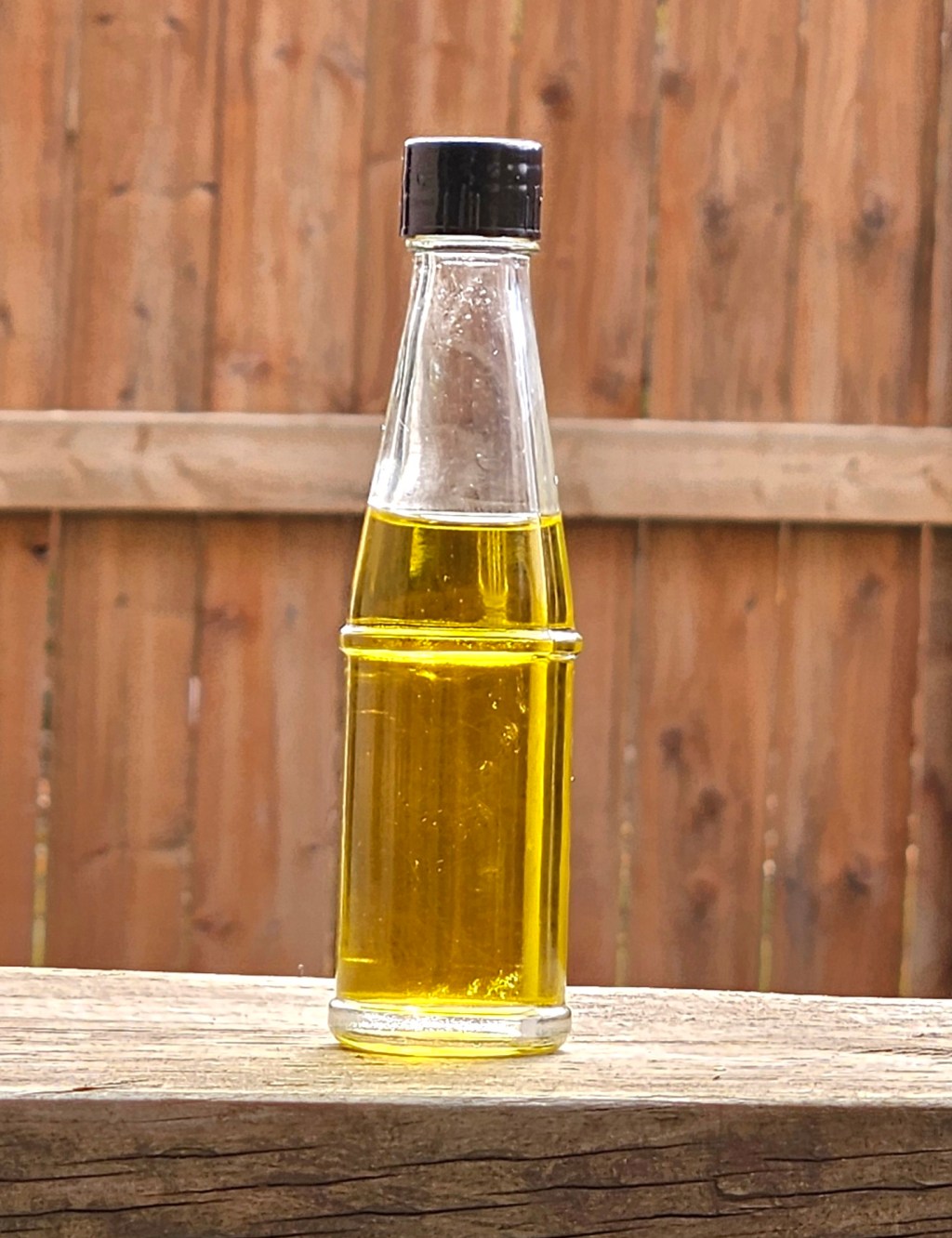
Banner: A bottle of olive oil. Courtesy C Fuller, November 2024
1“Articles of Faith: Divine Healing,” The Constitution and Manual of the United Missionary Church (Elkhart, IN: Bethel Publishing, 1965) p 16.
2S I McMillen, None of These Diseases (Westwood, NJ: Fleming H Revell, 1963). https://julieroys.com/missionaries-or-colonialists/
3Nigerian pastor David Abolarin, in his systematic theology What Christians Believe (Ilorin, Nigeria: For the Author, 1997) p 64, approaches divine healing entirely through the exercise of a gift of healing. So also American holiness Christian Studies professor in Nigeria, Danny McCain; We Believe: An Introduction to Christian Doctrine Vol 1, 2nd ed (Bukuru, Nigeria: Africa Christian Textbooks, 2004) p 291.
4Promoted by Albert B Simpson, first edition collected from articles published in an Alliance magazine 1883-1885; A B Simpson, The Gospel of Healing rev ed (Harrisburg, PA: Christian Publications, 1915); and discussed by American Baptist Millard J Erickson, Christian Theology 2nd ed (Grand Rapids, MI: Baker, 1998) p 852-858. Erickson decides healing in the atonement is not in the Bible, a typical Baptist response. See also the summary from a Southern Baptist, Samuel Emadi from 2020, https://www.thegospelcoalition.org/article/anoint-sick-with-oil-james-5/
5Stanley M Burgess, Gary B Gee and Patrick H Alexander, ed, Dictionary of Pentecostal and Charismatic Movements (Grand Rapids, MI: Zondervan, 1988) has articles on “Gifts of Healing” and “Healing Movements.” As a case study, see Nadya A Pohran, “Charismatic Healing: A Phenomenological Study of Spiritual Healing in Ottawa, Canada,” 2015 MA Thesis for the University of Ottawa, www.academia.edu/21116632/CHARISMATIC_HEALING_A_Phenomenological_Study_of_Spiritual_Healing_in_Ottawa_Canada?email_work_card=title
6Je’adayibe Dogara Gwamna, Perspectives in African Theology (Bukuru, Nigeria: Africa Christian Textbooks, 2008) p 74-75.
7As Lloyd D Fretz, Canada East Superintendent, urged, “Do We Make Disciples Like Jesus Commanded?” Communiqué (March/April 1994) p 2.
8“Unction,” F L Cross and E A Livingstone, ed, The Oxford Dictionary of the Christian Church 2nd ed with corrections and revisions (Oxford, UK: Oxford University Press, 1983) p 1406-1407.
9Charles W Nienkirchen, A. B. Simpson and the Pentecostal Movement: Study in Continuity, Crisis, and Change (Peabody, MA: Hendrickson Publishers, 1992), p 53-72.
10Anglican: BCP, p 351-365; Lutheran: (Philadelphia, PA: United Lutheran Church in America, 1919) p 414-427.
11Daniel Kauffman, Manual of Bible Doctrines (Elkhart, IN: Mennonite Publishing, 1898) p 175-177. Kauffman’s book became a standard among Mennonites, but anointing was a bit of an innovation at the time.
12https://www.goshen.edu/mqr/2004/12/january-2005-wenger/
13 John C Wenger, “Anointing with Oil.” Global Anabaptist Mennonite Encyclopedia Online. 1953. Web. 4 Feb 2022. https://gameo.org/index.php?title=Anointing_with_Oil&oldid=169718. This article, basically unchanged since 1953, claimed the only mention in early Anabaptist history, in Martyr’s Mirror (1660), was merely to deny Roman Catholic extreme unction was biblical. Mark Wenger in 2005 could add only 2 more mostly negative references to the practice from the 16th century.
14Eg R A Torrey, A J Gordon, A B Simpson.
15Lindsay Reynolds, Footprints: The Beginnings of the Christian and Missionary Alliance in Canada (Toronto: Christian and Missionary Alliance in Canada, 1982) p 520.


 EMCC History
Leave a comment