
I last mentioned the New Mennonite Church in connection with their missionary society founded in 1859.1 The NMC, which existed from about 1849 to 1875, was a precursor Church to the EMCC. From the imperfect memory and perspective of the highly organized 1920 Mennonite Brethren in Christ Church (a successor to the NMC) 45 years later, the New Mennonite Church seemed to have “very little organization.”2 Today, much more is known about the NMC than historian S Floyd Pannabecker was able to gather by 1918.3 The Mennonite Archives of Ontario has enough material to debunk the view that they were weakly organized.
Membership. One sign of the organization of a church is maintaining a roster of ministers, places to preach and membership. It was a small Church at maximum size—with perhaps 350-500 members (not counting children): no more than 20 members in Lincoln County (Niagara Peninsula), almost a couple hundred in York and Ontario Counties, maybe 100 to 200 in Waterloo County4 and interested families not grouped in congregations in Huron and Simcoe Counties and spread across the north shore of Lake Erie.5 At one point they also counted 16 members in Clarence Center, NY, served by John Lapp.6 Nevertheless they produced a preaching schedule for Ontario in 1870 that assigned 10 preachers to 13 places, plus two more places less often.7
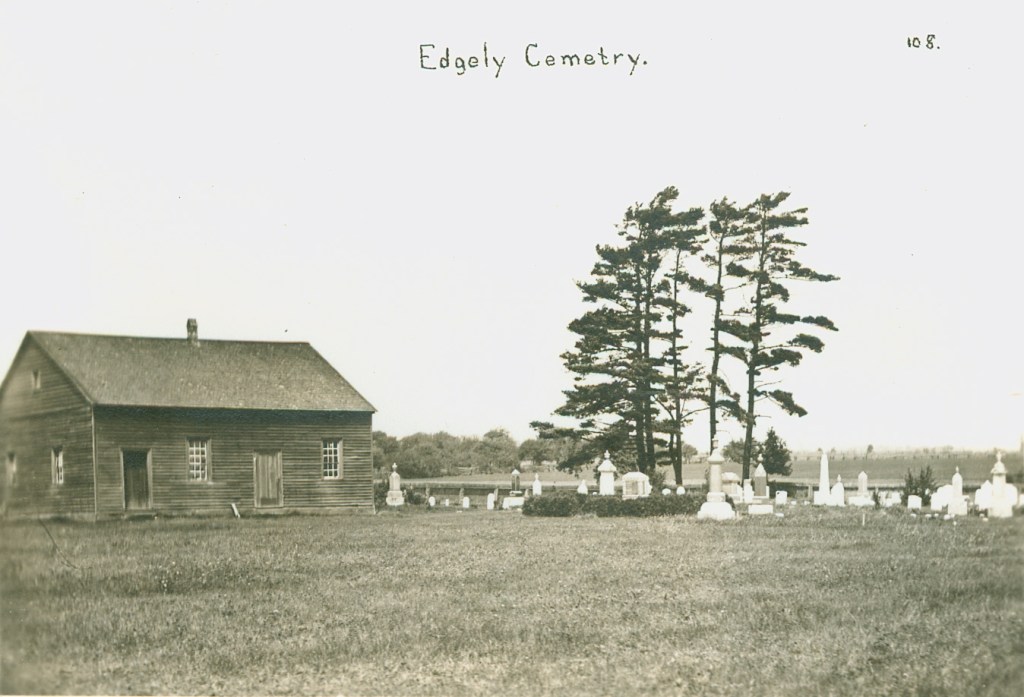
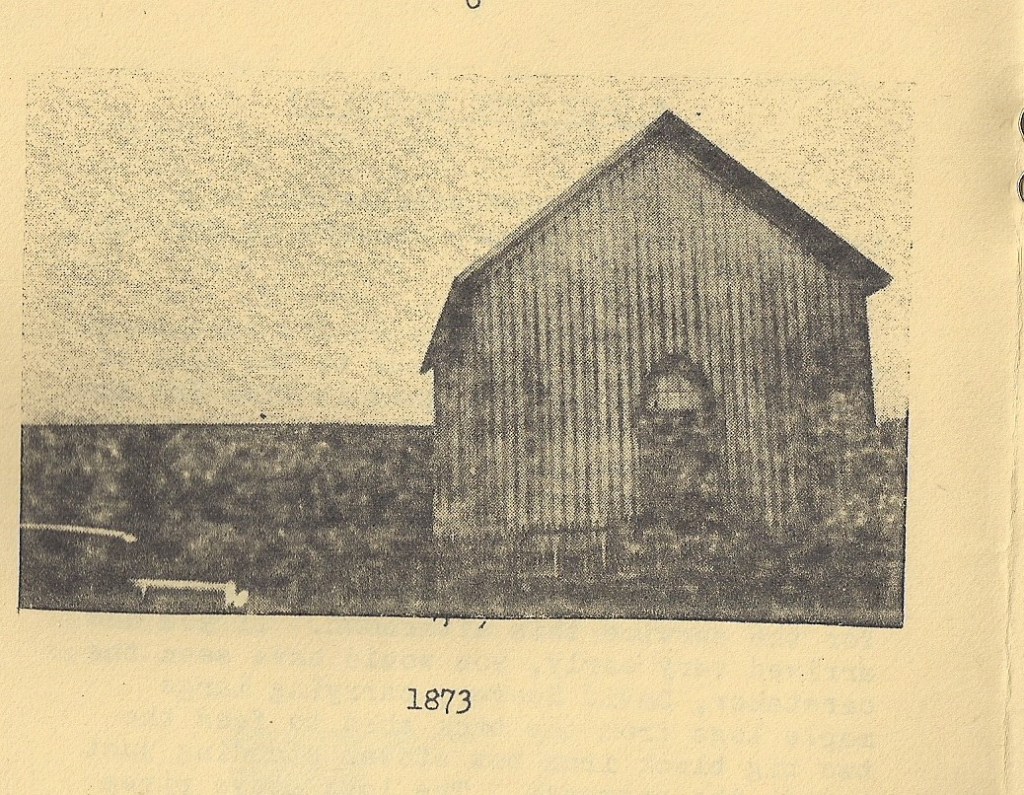
Preaching points. Some of these locations were probably homes or school houses, and only one building (Dickson Hill) was owned outright by the NMC; some were shared with other denominations. These 13 places were: four in Waterloo County: 1. Union (Roseville, North Dumfries Twp, building shared with the Evangelical Association), 2. Blair (North Dumfries Twp, shared with German Baptists), 3. Dundee (a building shared with German Baptists 1862 to 1870 in New Dundee village), Wilmot Twp) and 4. Breslau (Waterloo Twp, Waterloo Co); four in York County: 5. Vaughan (ie Schmitt’s Meeting House, Edgeley, Vaughan Twp shared with Mennonite Conference of Ontario), 6. Dixon’s (that is, Dickson Hill, Markham Twp) 7. Bethesda (Whitchurch Twp shared with others), 8. Wideman’s (probably also in Markham, perhaps using Wideman Meeting House, or Caspar Wideman’s house); one in Lincoln County: 9. Jordan (The Twenty, Louth Twp using a Mennonite Conference building); one in Oxford County: 10. Blenheim (Blenheim Twp, bordering Waterloo); and one in Ontario County (now Durham Region): 11. Scott (Scott Twp). Two locations remain unidentified: 12. Hoffman’s, and 13. Saloon. The other two were visited less often: 14. St Jacob’s (Woolwich Twp, Waterloo) and 15. Hay (Hay Twp, Huron County). Most of these locations have no photographic record in the MCHT except the building of Schmitt’s, (now in Black Creek Pioneer Village, Toronto), Dickson Hill, Bethesda, Wideman’s, and possibly the building in Blair, built with German Baptists, long since sold off. That building is currently a small private school.
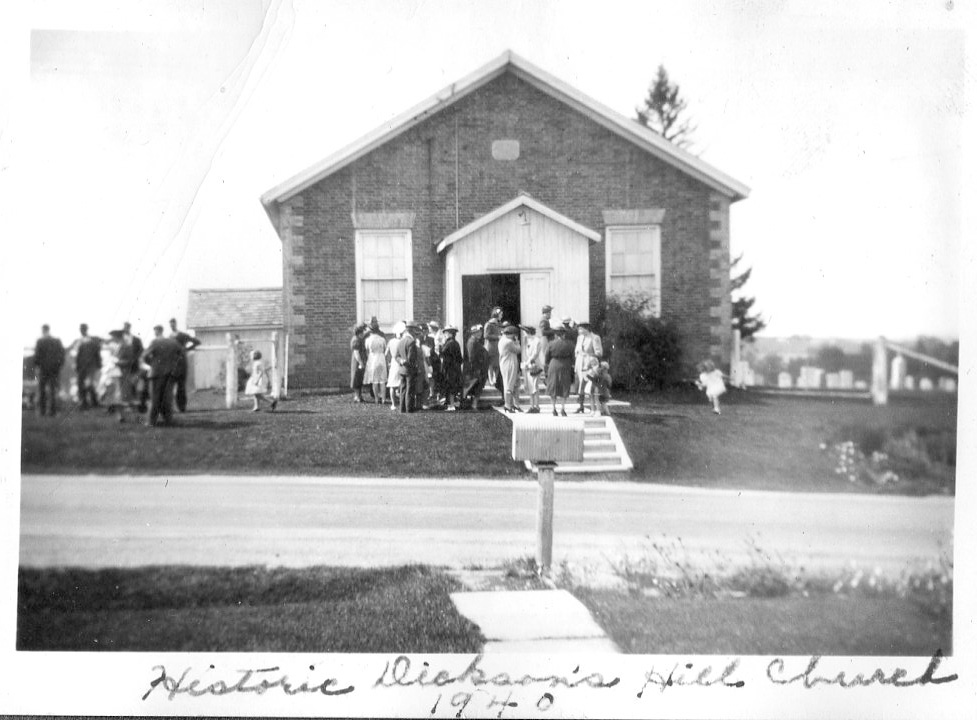
Courtesy Missionary Church Historical Trust
Preachers and deacons. Not all of these official workers continued in the NMC for very long, but here are the preachers and deacons who are known so far to have been involved at any time. Ministers with main identity in the NMC appear in bold. GAMEO stands for Global Anabaptist Mennonite Encyclopedia Online.
1. Baer (Bear), John (Senior), (1804-1894), ordained by the Mennonite Conference in 1838, Hespeler/ Breslau area (Wanner field), Waterloo County, NMC briefly about 1850, returned to Mennonite Conference of Ontario in 1851. Joined Reforming Mennonites 1874. preached for the United Mennonites, MBiC. Profile in GAMEO by Samuel J Steiner.
2. Bauman, John B (1800-1850), Freeport, Waterloo Co. Died while visiting Daniel Hoch.
3. Bowman /Bauman, Amos (1844-1891), Port Elgin, Bruce Co, ordained 1873, but acted as a deacon in the United Mennonites, Evangelical United Mennonite Church (EUM) and the Mennonite Brethren in Christ (MBiC).
4. Detweiler, Abraham Zeigler (1830-1912), Doon, Waterloo Co, ordained 1854 by Daniel Hoch. Did not join United Mennonites/ MBiC.
5. Detwiler, Noah (1838-1914), Roseville, Waterloo Co, entered 1874, joined United Mennonites 1875 and went on as an elder of the MBiC. Profile in GAMEO.
6. Geiger, Peter (1835-1920), Hays Twp, Huron Co, ordained 1863. Served as a local preacher at Breslau for the MBiC. Profile in GAMEO.
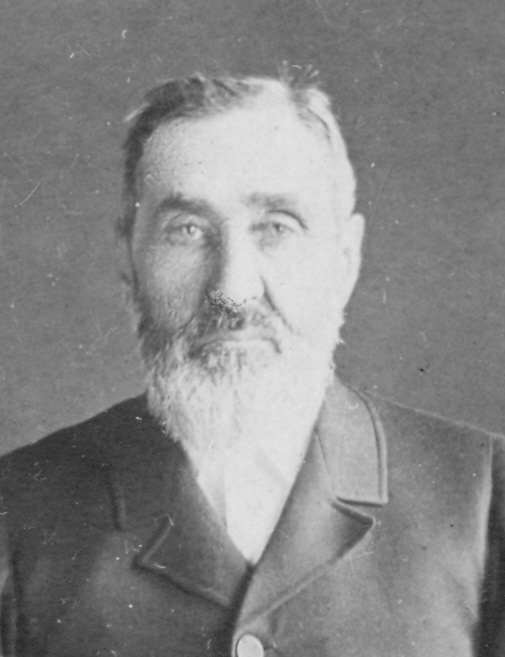
7. Geiger, Ulrich (1796-1864), Wilmot Twp, Waterloo Co, supported Hoch briefly about 1850, returned to Mennonite Conference of Canada/ Ontario 1851. Uncle of Peter Geiger.
8. Hoch (anglicized as High), Daniel (1806-1878), The Twenty, Lincoln Co, ordained 1831 by the Mennonite Conference, silenced 1849; temporarily designated an NMC bishop in 1850. Main organizer of the NMC but contended with it as well. Did not participate with the United Mennonite merger of 1875. Has a biography in GAMEO by Samuel J Steiner.
9. Hoch (High), Jacob (before 1805-1876), The Twenty, Lincoln Co, ordained 1852. Did not participate with the United Mennonite merger of 1875. Brother of Daniel Hoch.
10. Hunsberger, Ephraim (1814-1904), in Wadsworth, OH, later served with General Conference Mennonites.
11. Lapp, John (1798-1878), of Clarence, NY, later returned to main Mennonite Conference.
12. McCauley, John (1840-1899), of Markham, York Co, and then Blair, North Dumfries Twp, Waterloo Co, ordained by NMC in 1869. Received as a minister 1871 and later re-ordained by the Evangelical Association, serving mostly in Iowa. He occasionally wrote friendly reports to the Gospel Banner.
13. McNally, John (1822-1913), Blair, North Dumfries Twp, Waterloo Co, ordained 1852. Prominent in the United Mennonites, EUM, MBiC. Profile in GAMEO.
14. Raymer, Abraham (1814-1891), Box Grove, Markham Twp, York Co, Mennonite preacher pre-1845? Main preacher and evangelist in Markham. Designated a NMC bishop 1855, but did not act on it. Did not serve in United Mennonites for long. Chronology not clear. Profile in GAMEO.
15. Raymer, Joseph (1833-1878), Markham Twp, York Co, ordained 1858, again in 1874. Joined the United Mennonites. Brother of Abraham Raymer. Profile in GAMEO.
16. Rickert (Reichard), John (1830-1903), Mannheim, Wilmot Twp, Waterloo Co, entered 1872. Mostly served as a local preacher in the United Mennonites, EUM, MBiC.
17. Schlichter, Samuel (1821-1873), New Dundee, Wilmot Twp, Waterloo Co, ordained by 1853, left Mennonite Conference of Canada/ Ontario by 1855. Main NMC preacher around New Dundee. Profile in GAMEO.
18. Sherk, Abraham Break (1836-1916), Freeport, Waterloo Co, entered, ordained 1854, left for United Brethren in Christ 1856.8
19. Sherk, Samuel (1822-1900), Freeport, Waterloo Co; moved to Ohio then Kent Co, MI, entered ministry of NMC in 1860, ordained 1870. Joined MBiC Indiana Conference in USA. Brother of Abraham Break Sherk.
20. Steckley, John Hoover (1826-1904), Whitchurch Twp, York Co, entered 1860, ordained 1863. Prominent in United Mennonites, EUM, MBiC. Profile in GAMEO.
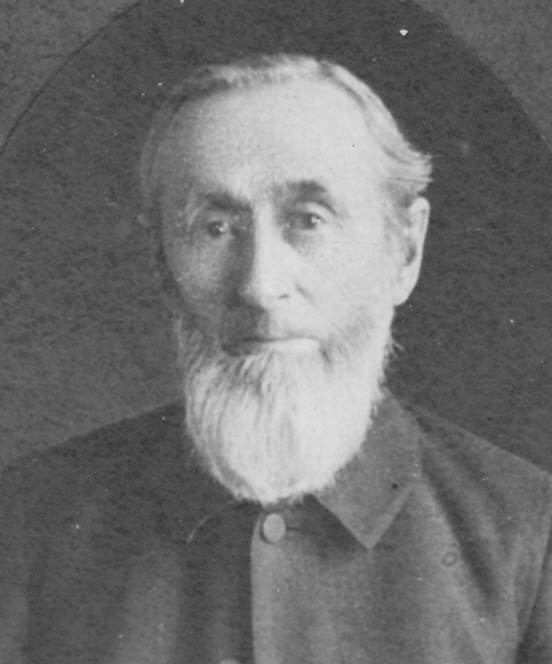
21. Troyer, Christian (Junior) (1797-1883) (sometimes called “Senior” because he had a son Christian), Vaughan Twp, York Co, ordained by Mennonite Conference of Canada/ Ontario in 1830. Colleague of Abraham Raymer. Some involvement in the United Mennonites and EUM as an evangelist. Profile in GAMEO.
22. Wideman, Caspar Hoover (1822-1906), Whitchurch Twp, York Co, ordained 1873 or 1874; served in United Mennonites/EUM 1875-1880.
Deacons:
1. Albrecht, Jacob (1788-1879), The Twenty, Lincoln Co, ordained 1833. Did not join United Mennonites.
2. Barkey, Daniel Hoover (1824-1913), Markham Twp, York Co, entered ca 1875, went into United Mennonites/ EUM/ MBiC.
3. Bauman/ Bowman, Benjamin B (1811-1871), Blair, ON, ordained 1852.
4. Bergey, Isaac, Markham Twp, York Co, ordained 1852, returned to Mennonite Conference of Ontario, 1855.
5. Burkholder, Jacob (1797-1872), Wideman Church, Markham, ordained 1852 by John Lapp for the “Raymer” group.9 Returned to Mennonite Conference of Ontario.
6. Clemens, Amos M (1819-1875), ordained in or before 1852.
7. Detweiler, John Ziegler (1817-), Doon, Waterloo Co. Did not continue with United Mennonites. Brother of Abraham Z Detweiler.
8. Haug, Michael (1844-), Berlin, Waterloo Co, entered 1874. Continued with United Mennonites, EUM, MBiC. Perhaps he was actually part of the Reforming Mennonite movement only.
9. Huber, Jacob (1817-1891) Washington, Blenheim Twp, Oxford Co, before 1853. Continued into United Mennonites, EUM, MBiC.
10. Neiss/ Neisz, Henry (Heinrich) of Ohio was listed as an NMC Bishop in 1858, and a member of the Missionary Society in 1859. Brother of Jonas.
11. Nice (Neisz?), Jonas, Ohio, (listed in 1855) continued with the General Conference Mennonites?
Further life of the New Mennonite Church. As mentioned, the NMC joined with the newer Reforming Mennonite Society (in March 1875) to form the United Mennonite Church, with two Conferences: Ontario, and Indiana (appointments in Indiana, Ohio and southern Michigan).
From these lists, it is noticeable that the three men from The Twenty (Hoch brothers, Albrecht) did not participate in the New Mennonite-Reforming Mennonite merger.10 The older men from Markham did not participate for long in the United Mennonite Church, but at least they did start out. Steiner notes that many of the NMC leaders were older men and there were few younger men coming up, perhaps one of the reasons the NMC was inclined to merge with the newer renewal movement.11 Most of the Waterloo County participants went into the merger. The Ohio connections did not continue for long.
Banner: Bethesda Church building ca 1999, a private residence.
Courtesy: Glenn Menard Collection, MCHT
1Part 1 is EMCC History Blog “Missionary Stirrings in the New Mennonite Church (1859).”
2Jasper Abraham Huffman, ed, History of the Mennonite Brethren in Christ Church (New Carlisle, OH: Bethel Publishing, 1920) p 40. Though Huffman was the editor, most of the early chapters was derived verbatim from the 1918 MA thesis for Bluffton College of S Floyd Pannabecker, “Origin and Growth of the Mennonite Brethren in Christ Church,” Huffman, p 7-8. For a review of all the stages by which the Evangelical Missionary Church of Canada formed, see EMCC History blog homepage, “Formation of the EMCC.”
3Samuel J Steiner, “New Mennonite Church of Canada West,” Global Anabaptist Mennonite Encyclopedia Online. February 2010. Web. 20 Aug 2021. https://gameo.org/index.php?title=New_Mennonite_Church_of_Canada_West&oldid=165367. Steiner has the best information about the NMC.
419 members were reported in 1863; Das Christlichte Volksblatt (May 13 1863) p 87, Mennonite Archives of Ontario (MAO), “New Mennonite Church” folder, MBiC fonds. Eighty-five names were listed in minutes of New Mennonite Church at Blair, 1869-1874; Mennogesprach (Vol 6 No 1) p 6. Not all were members or alive at the same time.
5Such as Levi and Fannie Raymer in Sunnidale Twp, Simcoe County, members since 1863 in Markham, or those Peter Geiger preached to in Huron County. Daniel Hoch visited interested Mennonites along the north shore of Lake Erie as well, in Cayuga and Rainham. Steiner reported an estimated population (adherents? community?) “approaching 400”; Steiner, “New Mennonite Church.” Samuel Sherk lived near Grand Rapids, MI, and Ephraim Hunsberger and Heinrich Neisz (Nice) in Ohio, but it seems there were few other affiliated members, except family, in those places.
6Das Christlichte Volksblatt (May 13 1863) p 87, MAO, “New Mennonite Church” folder, MBiC fonds.
7Samuel Schlichter and John McNally, ed, Preaching Plan for the New Mennonite Church in Canada West (Berlin, ON: New Mennonite Church, 1870). An earlier report in 1867 referred to the schedule for that year, “adjusting last year’s itinerary and occasional visits to remoter brethren;” Mennonitische Friendensbote (August 1867) p 61; MAO, “New Mennonite Church” folder, MBiC fonds. The remoter areas included Colbourne [Goderich area], Howick [Gorrie-Kurtzville], Brand [Brant, Elmwood], and Nottawasaga [Stayner area; location notes by Isaac R Horst].
8Michael G Sherk, “A Memoir of Rev. A. B. Sherk,” Waterloo Historical Society Vol 4 (1916), p 35-36. Michael Sherk does not mention his father’s brief career with the New Mennonites, however. See Steiner (GAMEO, 2010).
9Lewis J Burkholder, A Brief History of the Mennonites in Ontario (Ontario: Mennonite Conference of Ontario, 1935) p 282.
10Samuel Steiner suggests that the issue was open communion (Eby was for it) or close communion (Hoch was for it). Another might be the incipient Wesleyan holiness of the Reforming Mennonite group, not formalized yet in 1875 (see next EMCC History Blog “New Mennonite Church of Upper Canada and Ohio Part 3”) which Hoch and others perhaps did not accept. The Detweiler brothers, Abraham and John, ended up in the Methodist Church of Canada, for example, according to the Canada census (1901, 1911).
11Samuel J Steiner, In Search of Promised Lands: A Religious History of Mennonites in Ontario (Kitchener, ON/ Harrisonburg, VA: Herald Press, 2015) p 134. This valuable narrative documents the work of Daniel Hoch and the New Mennonite Church best of all.


 EMCC History
Leave a comment