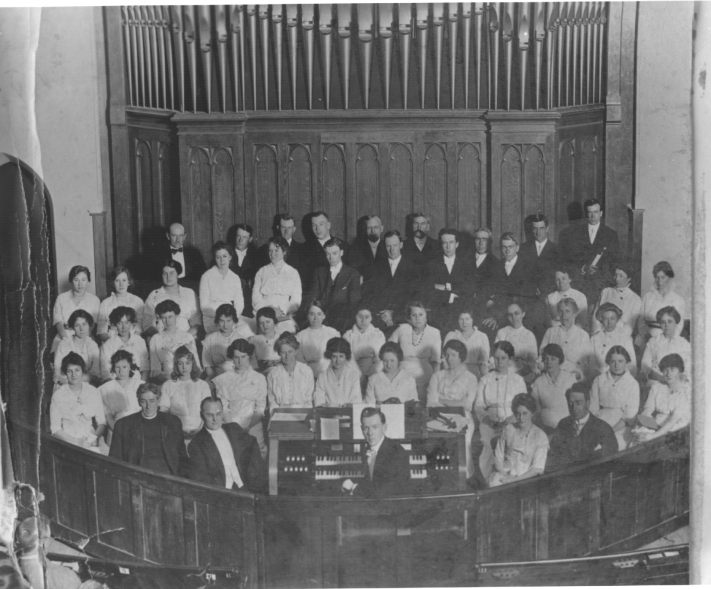
The way congregations are increasingly isolated in the Evangelical Missionary Church of Canada, the music we sing no longer generally unifies the Church, even inside a congregation. Unless worship leaders deliberately educate the churches, the default is the lowest common popular product. In a way this fragmentation is inevitable across time. Even in families, children grow up with different life experiences than their parents. With ever increasing access to music from many electronic sources, people listen to their individual musical choices every day, while in church we commonly have time for only 4-6 selections per week.1 In my blogs I have emphasized the MCHT collection of hymn books, because they have been collected. I like singing from hymn books but they have been long gone in most EMCC churches.2
Time winnows for quality. Even then, songs we claimed were “timeless” get tossed aside. Charles Wesley wrote thousands of hymns. Most are long discarded. Around 1980, a pianist at my Kitchener home church once complained to me about a popular chorus we sang a lot. I agreed it was musically trite, but I told her time would tell. No one sings that chorus now. Worship music is first useful, then perhaps skillful. Hopefully both.
and possibly beauty, but mainly channels for worship.
Author’s photo 2024
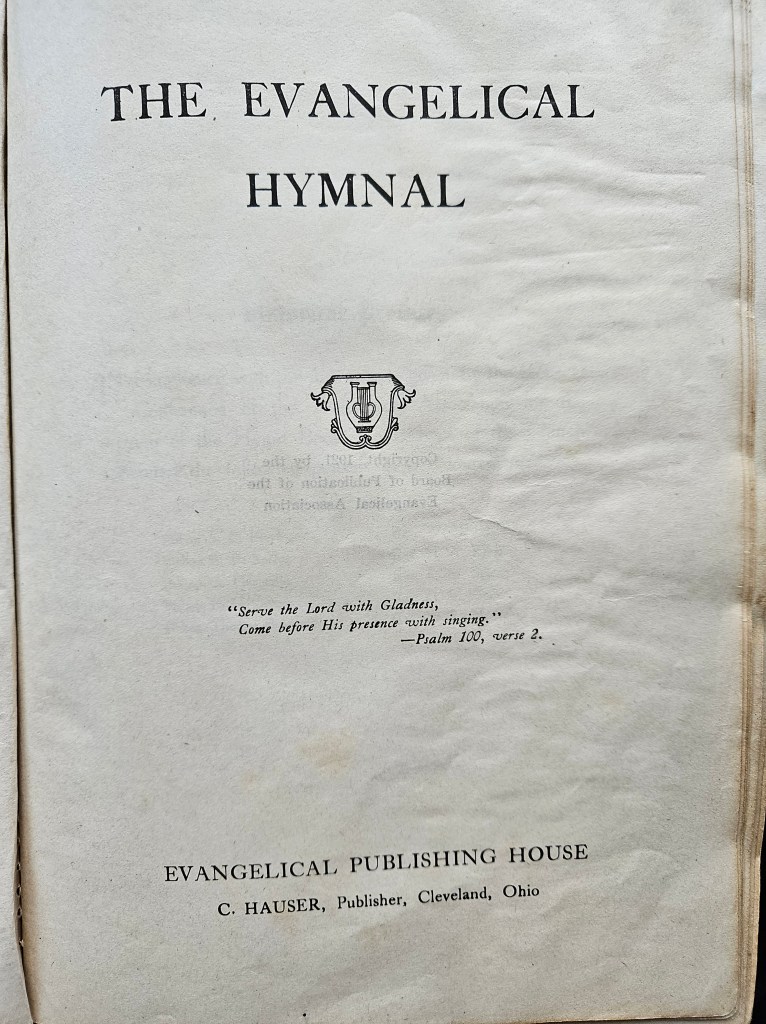
Evidences and Resources. The Missionary Church Historical Trust (MCHT) has only a few musical resources coming from the Evangelical Church/ Evangelical United Brethren (EUB) tradition currently.3 Apart from song and hymn books in Eldon Sherk’s collection,4 we have the Evangelical Hymn and Tune Book (1882), two copies of the Evangelical Hymnal (the edition of 1921),5 The Evangelical Church School Hymnal of 1931, and two copies of the The Hymnal (1957)6 of the EUB.7 The Evangelical Hymn and Tune Book title consciously imitated typical Methodist hymnbook titles of churches in Canada, the UK, Australia and the USA8. Predictably, the largest single contributor to the hymnbook of 1882 was Charles Wesley, with 117 texts, followed by Isaac Watts with 94 (out of 875 hymns). The 1957 Hymnal still has 34 hymns by Wesley, and 37 by Watts (out of 579). My choir director at Emmanuel Bible College, Wishart Bell, advised us that any good hymnbook should have plenty of works by Watts and Wesley.
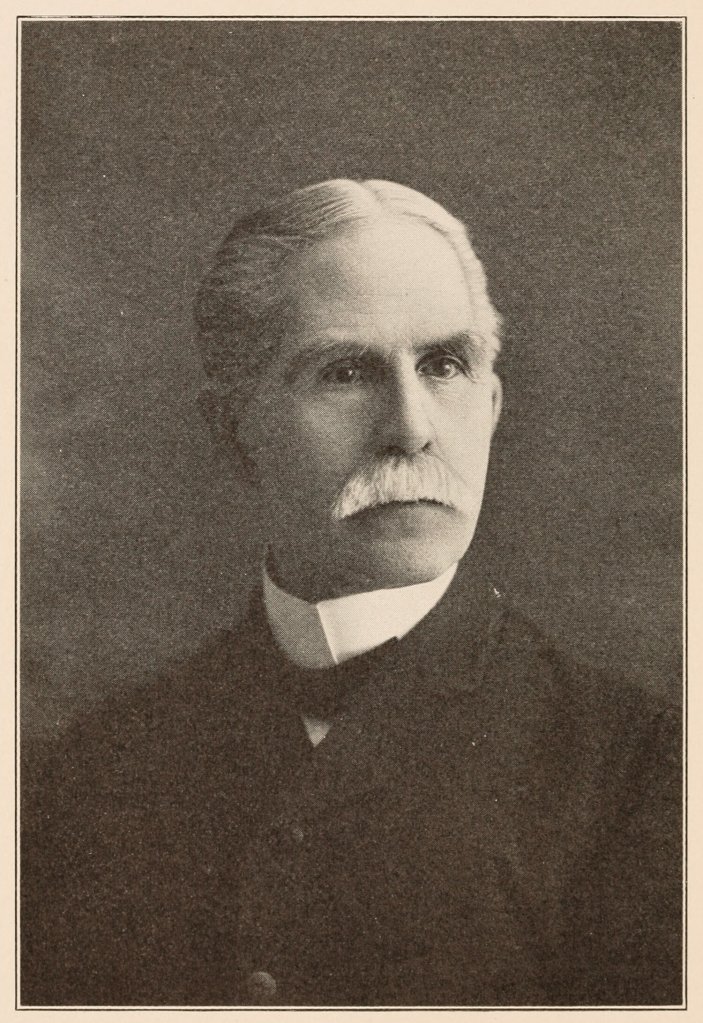
The Evangelical Association produced some hymn writers as well. Many Christians have probably sung some of the 2,000 gospel songs written and composed by Elisha Albright Hoffman, such as “Are You Washed in the Blood?” “Leaning on the Everlasting Arms,” or “I Must Tell Jesus.” Hoffman was was raised in the Evangelical heartland of Orwigsburg, PA, (his middle name “Albright” honours the church’s founder) married Bishop Orwig’s daughter and worked for 11 years at the Evangelical Publishing House in Cleveland, Ohio, before applying for Presbyterian (I don’t know why) ordination. He edited about 50 songbooks for Hope Publishing, Chicago, while pastor of churches over 42 years. The Wikipedia article about him quotes his definition of a hymn which guided his own compositions: “a lyric poem, reverently and devotionally conceived, which is designed to be sung and which expresses the worshipper’s attitude to God or God’s purposes in human life. It should be simple and metrical in form.” A hymn should unify a congregation in singing it.9
Herbert H Bock served as an interim pastor at Aylmer and Kitchener-Faith EMCs in the 1990s and had been an associate of the Baptist evangelist Barry Moore, as was the first Missionary Church of Canada president, Alf Rees. Bock’s earliest church connections were with the EUB North West Canada Conference. (He completed a thesis at Western Evangelical Seminary on the church schools of the North West Canada Conference in 1955, for example). He donated to the Missionary Church Historical Trust at least six song and hymn books plus a guide on how to direct congregations and choirs.10 Three hymnbooks are in German, and maybe one at least was published by the Evangelical Association.11 It seems he valued congregational singing, as I think the Bible does too (eg Colossians 3:16).
A Musical Path. The history of Evangelical Association hymnbooks and music may be extended by comments in the histories of the EvA/EvC by Samuel Spreng (1927) and Raymond Albright (1942).12Albright includes in his extensive bibliography many hymnbooks prepared for use in the Evangelical Association in German and English from 1817 to the 1940s. It seems the Evangelical experience was similar to the Mennonite Brethren in Christ who at first discouraged the use of choirs and instruments in worship, only gradually relaxing the rules. Articles in the church magazine The Evangelical Messenger for 1869 noted that early Evangelical Association meetings did not use instruments or choirs,13 in fact there were reasons to avoid their use, though the Mennonite avoidance of personal promotion (“pride”) was not mentioned. Apparently the criticisms ranged from the pragmatic: choirs make worshipers passive, to the religious: “choirs destroyed the spirituality of a service.”14 The latter criticism hid differing, possibly legitimate, opinions about what is “spirituality,” probably. One EvA annual Conference in the later 19th century urged the use of singing schools.15 After the American civil war many city Evangelical churches started choirs, though not always approved by all members.16 The Evangelical Church Discipline added an article promoting congregational singing (but without comment on instruments) in 1931.17
In my own musical collection, I have Daniel B Towner, ed, The Gospel Hymn Book once owned by a Miss Edna Ratz [married name: Haussamen] (1888-1979)18 of New Hamburg, ON, who was an Evangelical Church member, married in 1914, which suggests some Evangelical Association members enjoyed the gospel song tradition of revivalism into the 20th century. Miss Ratz’ copy was a reprint by the Moody Bible School publisher (Chicago, IL: The Bible Institute Colportage Association), but first published by the United Brethren in Christ-related Lorenz Publishing in Dayton, OH, in 1903. I think I inherited this book through the kindness of Grace (Mohr) and Burton Eidt, Evangel members who grew up in the EUB in rural Waterloo County at Oetzel’s Church.
As I mentioned in another article, I am not musically trained to assess the trends and quality of our church musical traditions, but I would hope that those who are would see fit to sympathetically survey the music in our worship services past and present, and make recommendations. Until then we will be subject to every wind that blows from the world and from the contemporary Christian scene, not necessarily all that bad, just that we do so unthinkingly most of the time.
Sometime in another article I will comment on my personal favourite hymnbook from the Missionary Church past, though it is not as old as many books I have mentioned: Hymns for Worship (1963).
Banner: Presbyterian Church choir in Richmond Hill, ON, 1915. Wikimedia Commons. Public domain.
1The loss of the evening services and Zoom meetings eliminated still more times for congregational singing.
2Southern Baptists reflect on the same experience in this blog: https://churchmusictoday.wordpress.com/2011/05/24/death-of-the-hymnal-why-are-churches-beginning-to-phase-out-the-use-of-hymnals-in-modern-worship/
3Profiles of early Evangelical Association hymn writers, Milton A Loyer (2014): https://umarch.lycoming.edu/Early_Hymn_Writers.htm
4See EMCC History Blog: “Music in the early EMCC Part 1: The Eldon Troxel Sherk Collection.”
5I have a copy of The Evangelical Hymnal (Cleveland, OH: Evangelical Publishing House, C Hauser, 1921) originally owned from 1921 by Nathaniel Ratz (1886-1981), an Evangelical Church member from Kitchener and Wilmot Centre, Waterloo County, Ontario. At his death, Nathaniel was a member of Evangel Missionary Church, Kitchener.
6Some principles of editing this hymnal may be found in Paul H Eller, “A New Church Hymnal is in the Making,” in Raymond M Veh, ed, Year Book (Church Annual) of the Evangelical United Brethren 1954 (Harrisburg, PA/Dayton, OH: Evangelical Press/ Otterbein Press, 1953) p 31-32, 35.
7One copy, originally donated to Zion EUB Church, New Hamburg, ON, is in the Kenneth W Wideman Collection, Box 6025 MCHT.
8Sometimes titled Methodist Hymn Book with Tunes.
9https://en.wikipedia.org/wiki/Elisha_Hoffman
10Box 6060 MCHT.
11Zions Leider. This needs some more study.
12Theodore Jesske’s book on the history of the Evangelical Church in western Canada, Pioneers of Faith (Medicine Hat, AB: The Evangelical Church in Canada, 1984) does not deal with music so far as I can see.
13Raymond W Albright, A History of the Evangelical Church (Harrisburg, PA: The Evangelical Press, 1942) p 399. Albright notes one of the first Association hymnbooks spiritualized the place of musical instruments by its name Das Geistliche Saitenspiel of 1817, which could be translated The Spiritual Strings or Lyre ie the voices alone would be the instruments of praise.
14Albright, p 298.
15Pittsburg Conference (ie district), Albright, p 298.
16Albright, p 304.
17Albright, p 400.
18Some details from Generations of Waterloo Region website.


 EMCC History
Leave a comment