
Morley Callahan wrote of “Two Solitudes” in a novel about Canada by that name, but Canada actually has dozens of solitudes beyond English and French—groups that act and think separately in the political unit called Canada. The early EMCC churches (Mennonite, Evangelical Association)1 were German-language oriented, but because of their revival piety, they looked on anyone who would listen as potential converts to the gospel of Jesus.2 Each stream had a different pace, but steadily they moved into English-language ministry, which was the mainstream of Upper Canada/Canada West/ Ontario life. But did they cross the French-English, the White-Black or the European-Indigenous divides?
The Mennonite Brethren in Christ (MBiC) never saw French-speaking Quebec or the francophone parts of New Brunswick or even of Ontario as mission fields, even when they became committed to working with Africans in the British protectorates of North and South Nigeria from 1905.
Courtesy Missionary Church Historical Trust
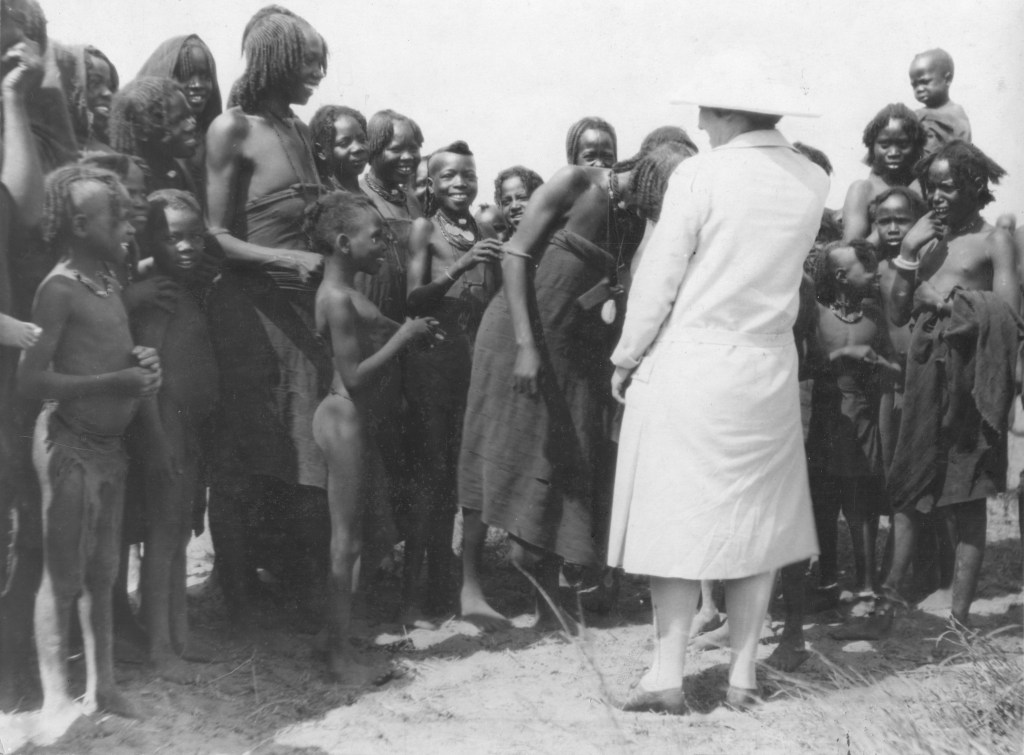
MBiC itinerant evangelist Eusebius Hershey (1823-1891) of the Pennsylvania Conference, of course, had journeyed on his own and preached in 1890-91 to Africans in Sierra Leone and Liberia.3 Two groups who did use English and were right in Ontario, who encountered the MBiC in the 19th and early 20th century, however, were 1) the people of African origin (the Negroes, the coloured folks, the Blacks), and 2) First Nations who lived near areas of Mennonite settlement. This blog and the next will comment on meetings of the MBiC with the Black population of Ontario. I hope a guest writer will tell us about the EMCC encounter with First Nations.
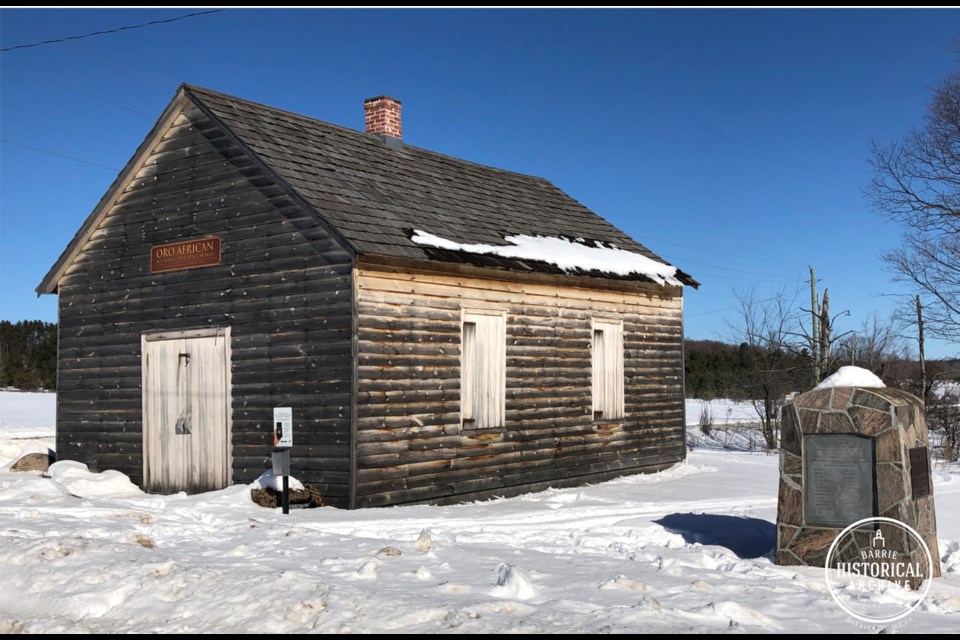
Ontario’s Black communities were from various sources, with American freedmen and fugitive enslaved people the major ones at first. More than 40 settlements of Blacks were set up in Ontario by the American fugitive people or by white Protestant allies between 1825 and 1850.4 Many became settlers on rural lands before surveys and some were granted land because of wartime service, as in Oro Township, Simcoe County.5 There were also Blacks who settled in the growing towns of Ontario: Toronto certainly, but also Amherstburg, Windsor, Chatham, Dresden, St Catharines,6 Hamilton, and Owen Sound.7
I grew up with the impression that Ontario never had slavery, but that was false. Slaves were mentioned in European settlements in New France, Nova Scotia, New Brunswick and Upper Canada from practically the start of all the colonies. Dr Allen Stouffer summarized the literature in 1992; more has been written since.8 In Nova Scotia, the first settlers had immigrated earlier than to Ontario, as Loyalists or the slaves of Loyalists as a result of the American War of Independence, and again after the War of 1812.9 Some came from Jamaica as freed slaves (known as the Maroons.) Even after the abolition of slavery in the British Empire in 1834, Blacks suffered continual discrimination everywhere under white domination.10 People of the Caribbean, present in noticeable numbers in Toronto after the First World War,11 came in greater numbers to Ontario only after anti-Black immigration legislation was relaxed in 1967. These days the Black communities are getting some well-deserved renewed attention.
African-origin people brought their faith with them, whatever they had, mainly Methodist or Baptist,12 though there were others, such as Anglicans in Nova Scotia and New Brunswick.13 Often one of the first things the community did was organize preaching for themselves. In some centres such as Halifax and Toronto, congregations of Euro-Canadian Methodists and Baptists initially made room for their fellow church members, but many books mention that racial prejudice on the part of white populations made the Blacks feel second class. After a few years, Black leaders emerged for separate congregations, or separate organizations were founded. These are fascinating, but I will refer you to other’s accounts.14
Mennonite contact with Ontario’s Black settlers has been researched by Redeemer University College sociologist Timothy Epp, but the results so far show almost random interactions. A Mennonite farmer in Waterloo County employed a Black man, and helped him even when the man was injured; a family adopted a Black child; and there were some intermarriages, for example.15 Epp speculates that since pacifist Mennonites and Blacks both entered Upper Canada about the same time and had been treated as people at the bottom of the ethnic “stack” of Anglo-Canadian approval,16 there may have been some sympathy of the more prosperous Mennonite farmers for the discriminated Black population.17
The likeliest source for news of Black/African-origin contact with the MBiC and into the period of the United Missionary Church, is the Gospel Banner, the church magazine from 1878 to 1969. Unfortunately, a search of the excellent CD-ROM index of the magazine did not reveal any references to “Negroes,” “Blacks” or “African-Americans” but produced some articles about race-relations in the USA in the 1950s and 60s—not very useful for my project. I had to do my own digging.
Next Blog: African-Origin People in Ontario: Part 2: MBiC contacts with African-origin people
Banner photo: Two unknown women at an MBiC camp meeting ca 1940. Courtesy Missionary Church Historical Trust
1I am totally unfamiliar so far with any Evangelical Association ministry among African-origin people in Ontario or with First Nations, except the work of George and Marilyn Peck under the Northern Missionary Fellowship; Henry J Getz, ed, A Century in Canada: The Canada Conference of the Evangelical United Brethren Church (Kitchener, ON: Committee on Centennial Observance, 1964) p 22. I would be delighted to learn more from readers of this blog. Jean E (Hallman) Morby, has included an account of her involvement with the Pecks when she was a young woman, Every Day is an Adventure ([Kitchener,] ON: By the Author, 2023), especially p 35-44.
2This is a characteristic of evangelical, Wesleyan and Pietist spirituality: All have been created in God’s image, all have sinned, all are offered Christ as Saviour, all can be saved by faith alone, all are welcome in the Body of Christ. Racist attitudes in our churches arose whenever we assimilated to cultural and colonial attitudes.
3Everek R Storms, What God Hath Wrought: The Story of the Foreign Missionary Efforts of the United Missionary Church (Springfield, OH: United Missionary Society, 1948) p 13-20, 22, 108, 113. Ida May Compton from the Nebraska Conference also served under the Hephzibah Faith Missionary Association in South Africa 1900-1909; Storms, p 119. Ebenezer Anthony and Alex Banfield went to Nigeria under the Sudan Interior Mission in 1901. Banfield returned to Nigeria under the MBiC in 1905 with his wife Althea; Clare Fuller, Banfield, Nupe and the UMCA (Ilorin, Nigeria: World Partners, 2001) p 36-38. The next Ontarian MBiC to Nigeria were Cornelia (Pannabecker) Chester in 1906 and Emma Hostetler in 1907. Another missionary family, Isaac and Alice Lehman from Nebraska, first went to Rhodesia (Zimbabwe) under the Brethren in Christ, but opened their own independent mission in southern Africa from about 1901, though with MBiC links; Isaac O Lehman, “African Evangelistic Mission,” in A B Yoder, ed, United Missionary Society Yearbook 1930 (UMS, 1930) p 89-94; see also notes on this mission in my book on Sam Goudie, Hidden in Plain Sight.
4John Michael Bumsted, The Peoples of Canada: A Pre-Confederation History 4th ed (Don Mills, ON: Oxford University Press, 2014) p 322.
5https://www.barrietoday.com/columns/remember-this/remember-this-names-for-freedom-5-photos-2672584
6https://www.tvo.org/article/why-harriet-tubman-made-st-catharines-her-home
7https://www.history-articles.com/black-history-version2.html
8Allan P Stouffer, The Light of Nature and the Law of God: Anti-Slavery in Ontario 1833-1877 (Montreal and Kingston: McGill and Queen’s University Press, 1992) p 8-12. See also Graham Reynolds with Wanda Robson, Viola Desmond’s Canada: A History of Blacks and Racial Segregation in the Promised Land (Halifax, NS: Fernwood Publishing, 2016) p 14-18.
9Terrence Murphy and Roberto Perin, ed, A Concise History of Christianity in Canada (Toronto: Oxford University Press, 1996) p 149. Among numerous studies of African-origin settlements in Nova Scotia, one might read Donald H Clairmont and Dennis William Magill, Africville: The Life and Death of a Canadian Black Community (Toronto: McClelland and Stewart, 1974).
10See for instance, James W St G Walker, “Freedom Denied,” in The Black Loyalists: The Search of a Promised Land in Nova Scotia and Sierra Leone 1783-1870 (Toronto: University of Toronto Press, 1999) p 40-63, or the first two chapters of Reynolds and Robson, p 14-68; in Hamilton, ON: Bumsted, p 323.
11Often as female domestics; Keith S Henry, Black Politics in Toronto Since World War I (Toronto: The Multicultural History Society of Ontario, 1981) p 2, 14.
12Dorothy Shadd Shreve, The AfriCanadian Church: A Stabilizer (Jordan Station, ON: Paideia Press, 1983) p 42. Josiah Henson was a Methodist preacher when he arrived in Upper Canada with his family as refugees in 1830 and was soon preaching here; Josiah Henson, The Life of Josiah Henson, Formerly a Slave, now an Inhabitant of Canada (Boston, MA: Arthur D Phelps, 1849/republished Dresden, ON: Uncle Tom’s Cabin Museum, 1965) p 25, 57.
13Murphy and Perin, p 116.
14Shreve’s book for Black Baptists in Ontario especially. Robin Winks, The Blacks in Canada (Montreal and Kingston: McGill and Queens University Press, 1971) p 355-360 for the African Methodist Episcopal Church (AME), the African Methodist Episcopal Zion Church (AMEZ) and the British Methodist Episcopal Church (BME). See also Neil Semple, The Lord’s Dominion: The History of Canadian Methodism (Montreal and Kingston: McGill-Queens University Press, 1996) p 123-126. Adrienne Shadd, Afua Cooper and Karolyn Smardz Frost, The Underground Railroad: Next Stop, Toronto! (Toronto: Natural Heritage Books, 2002), ch 4, “Social, Cultural and Religious Life,” p 27-31 for Toronto. Allen Stouffer has written, still unpublished, chapters on the BME in Nova Scotia.
15Kevin Flatt, “Stories woven together,” Faith Today (July/August 2015) p 18.
16Howard Palmer and Leo Dreidger, “Prejudice and Discrimination,” The Canadian Encyclopedia (Toronto: McClelland and Stewart, 1999) p 1889.
17The fascinating book by Linda Brown-Kubisch, The Queen’s Bush Settlement: Black Pioneers 1839-1865 (Toronto: Natural Heritage Books, 2004) p 41-42, was able to add only one incident of a Waterloo Mennonite helping black settlers.

 EMCC History
Leave a comment